


What the World Cup, Streetcar Expansion, and New Parks Mean for Buyers and Investors
Direct answer: If you are searching for Downtown Kansas City homes for sale, Kansas City investment property, or Kansas City multifamily homes for sale, the biggest story is not one event. It is the long-term reshaping of the urban core. Kansas City’s World Cup spotlight matters, but the more durable real estate story is the combination of transit expansion, public-space investment, new housing, and stronger neighborhood connectivity that is changing how people live, move, and invest in downtown and the surrounding districts.
Why this matters now
Kansas City is entering a period where national attention and local infrastructure are moving in the same direction. As a FIFA World Cup 2026 host city, Kansas City will receive global visibility. But from a real estate perspective, visibility is only part of the equation. The projects likely to matter most to buyers and investors are the ones that improve everyday utility: easier mobility, stronger public spaces, better neighborhood connection, and more reasons for residents to spend time in the core year-round.
That is why serious buyers and investors are paying attention not only to the event calendar, but also to Downtown Council development data, the progress of Barney Allis Plaza, the advancing plan for Roy Blunt Luminary Park, the KC Streetcar Main Street Extension, the Riverfront Extension, and the proposed Greenline KC.
The projects reshaping Downtown Kansas City
1. Barney Allis Plaza is becoming a more usable downtown gathering space
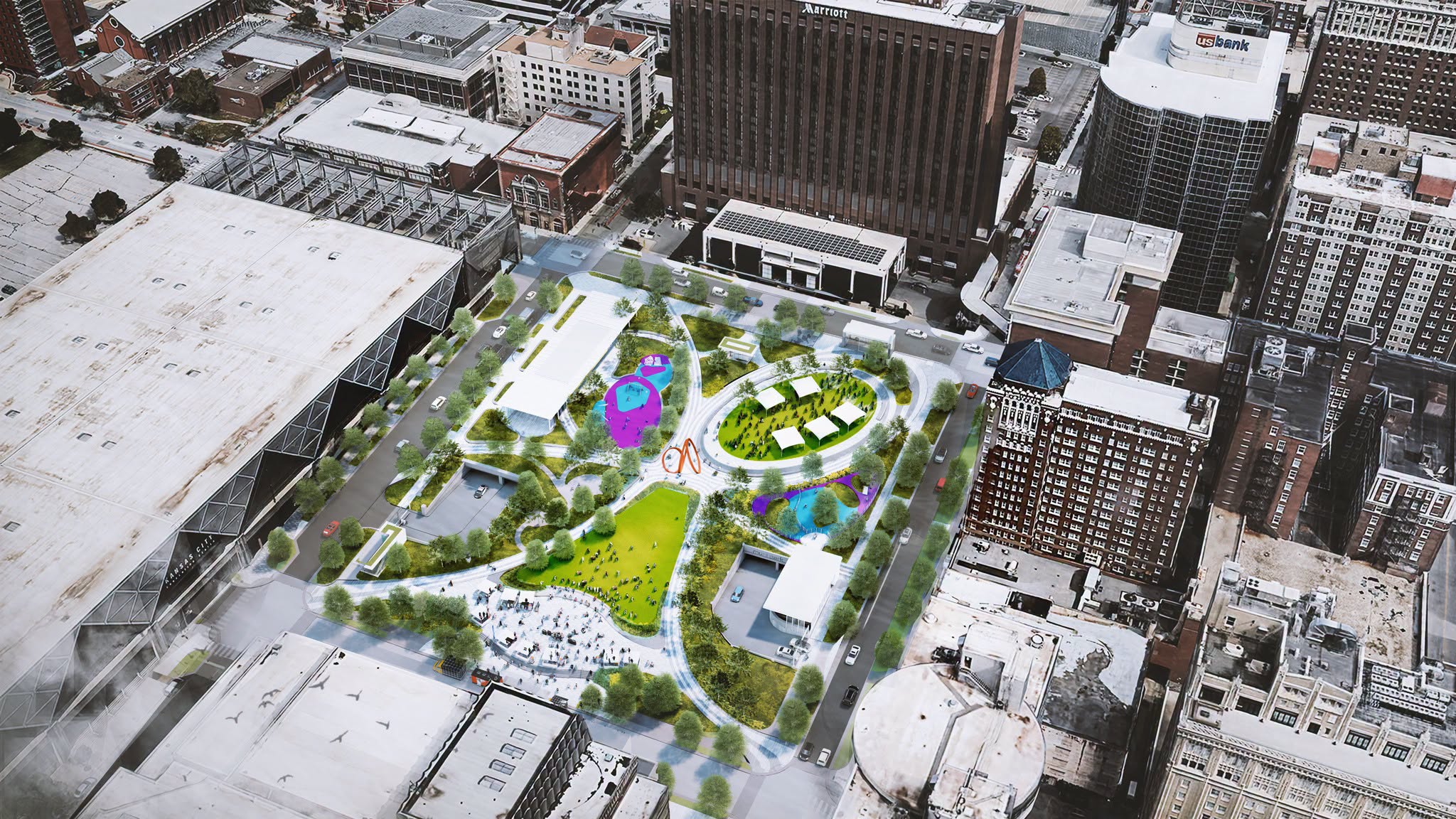
Barney Allis Plaza is not just a beautification project. It is a redesign of a major downtown public space that aims to improve accessibility, event programming, and the convention-and-culture district experience. The current plan includes a new 580-space garage topped by a 5-acre plaza and green space intended for festivals, recreation, and daily use. For real estate, that matters because high-functioning public space tends to support foot traffic, neighborhood identity, and perceived location quality.
2. Roy Blunt Luminary Park is a major connectivity play
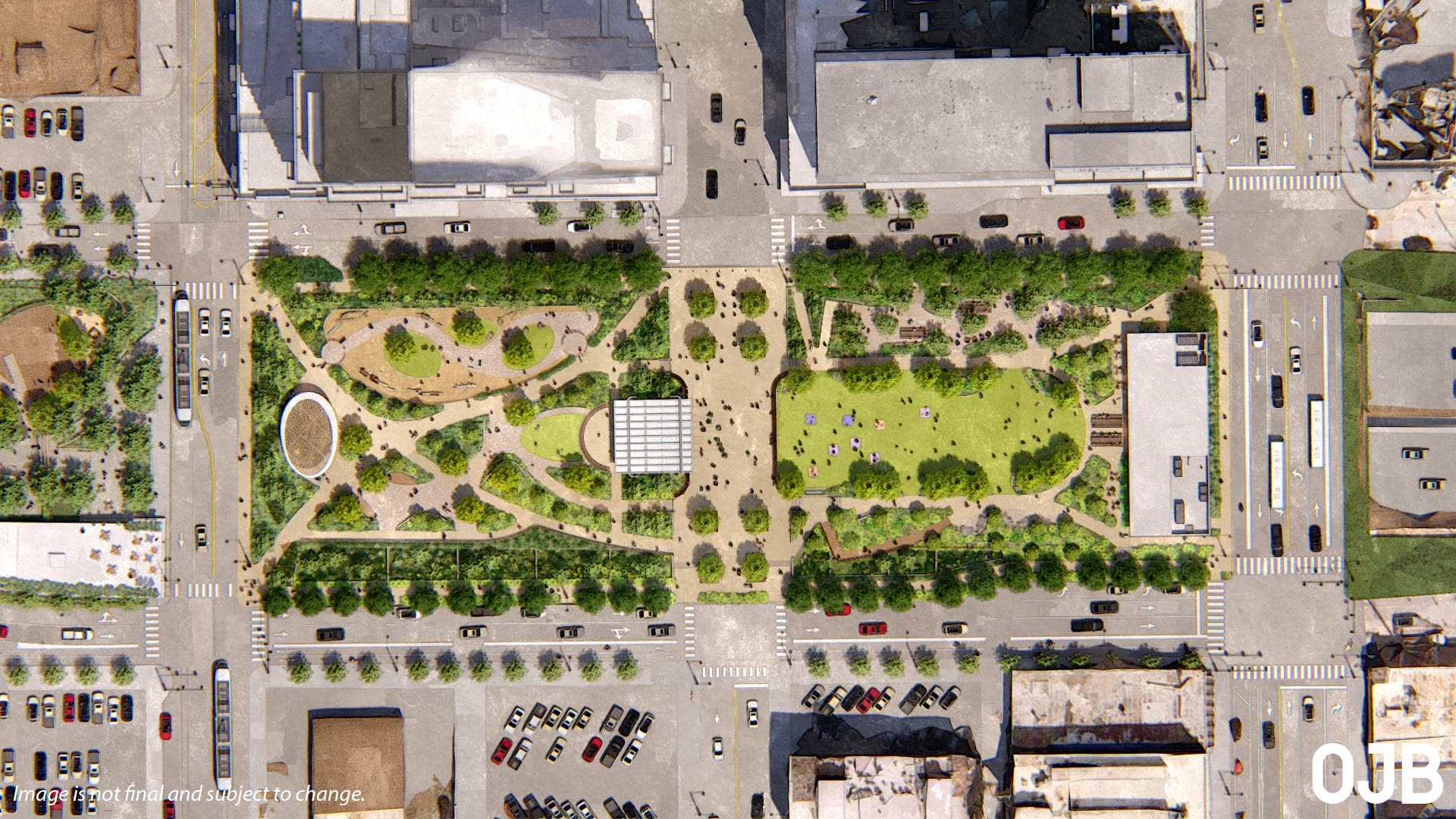
Roy Blunt Luminary Park is designed as a 5.5-acre cap park over I-670, reconnecting downtown areas that have long been divided by highway infrastructure. In practical real estate terms, that kind of project can change how nearby locations are experienced. Places that once felt separated can begin to function more like one connected district. That can influence resident behavior, visitor movement, business activity, and long-term buyer perception.
3. The streetcar system keeps expanding the map people actually use
The KC Streetcar’s Main Street Extension opened in late 2025, and the Riverfront Extension is targeting spring 2026. That matters because transit does not just move riders; it changes search behavior. Buyers begin to filter for homes near the streetcar. Renters start to prioritize car-light living. Investors reevaluate what counts as a strong convenience location. Over time, that can help strengthen demand in corridors that offer better access to jobs, entertainment, restaurants, and civic amenities.
4. Greenline KC adds another layer to the walkability story
Greenline KC is proposed as a 10-mile urban loop around greater downtown. While it remains a planned project, the concept aligns with a larger shift in Kansas City: more emphasis on walkability, healthier transportation options, neighborhood discovery, and public-realm value. For buyers and investors, that kind of improvement matters because demand often follows places that feel easier and more enjoyable to navigate.
5. Cultural anchors still matter, and the Nelson-Atkins is part of the long game
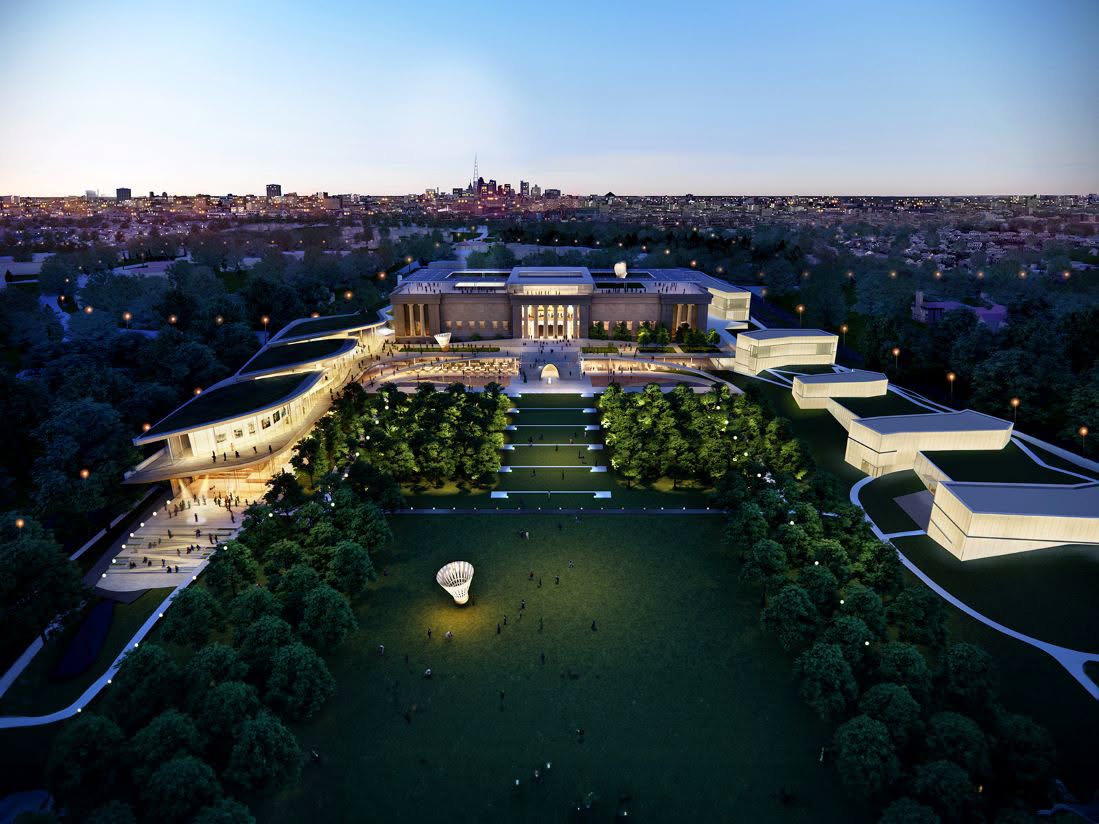
The future expansion at the Nelson-Atkins Museum of Art is another signal that Kansas City is investing in institutions that strengthen quality of place. Museums, parks, trails, and transit do not affect every property equally, but together they reinforce the kind of urban ecosystem that tends to attract residents, visitors, employers, and long-term capital.
What the current numbers say about the Kansas City housing market
The latest public numbers show why Kansas City remains attractive even as affordability pressure persists. Heartland MLS reported a February 2026 median sales price of $315,000, with 6,808 active listings and 2.2 months of supply. That is not a deeply distressed market, and it is not a wide-open buyer’s market either. It suggests continued competition, especially for well-located homes and income-producing property.
City-level census data also helps explain the broader appeal. The U.S. Census Bureau lists Kansas City, Missouri at 516,032 residents, with 221,979 households, a median owner-occupied home value of $242,900, and median gross rent of $1,238. That combination still reads as relatively attainable compared with many larger metros, which is one reason Kansas City continues to attract both owner-occupants and investors.
At the same time, affordability is not a problem the market has solved. The Mid-America Regional Council recently reported that rentals under $1,000 a month have nearly halved across the region, while renter cost burden affects nearly one-third of renters in every county. That means buyers should not treat “Kansas City is affordable” as a blanket statement. Some submarkets remain accessible. Others are repricing quickly. Block-level analysis still matters.
Downtown-specific data adds another layer. Downtown Council’s Q1 2026 market update showed 33,297 downtown residents, 2,769 housing units under construction, and 6,118 planned. It also reported $2.5 billion in downtown projects under construction and $4.2 billion planned. That is meaningful pipeline volume, and it reinforces the idea that downtown Kansas City is not simply preparing for one international event. It is in the middle of a broader development cycle.
What this means for buyers looking for homes for sale in Kansas City
For buyers searching Kansas City homes for sale, the smartest approach is to think less about citywide headlines and more about lived geography. The question is not whether “Kansas City” is improving. The better question is which neighborhoods are benefiting most from stronger transit links, public-space upgrades, cultural activity, and residential momentum.
That makes areas tied to the urban core especially important to monitor. Searches like Downtown Kansas City homes for sale, condos near the KC Streetcar, Crossroads lofts, River Market condos, Beacon Hill real estate, and homes near the streetcar are all different versions of the same buyer intent: people want convenience, access, and future relevance.
Buyers should also remember that public investment does not automatically raise value on every block. The opportunity is strongest where infrastructure, neighborhood identity, and housing demand reinforce one another. That is why comparing live inventory with neighborhood context is more useful than reacting to one headline.
Readers who want to move from macro research into active search can compare listings through Kansas City homes for sale, browse the site’s Explore Kansas City section for neighborhood context, or use the broader Kansas City real estate blog for market commentary.
What this means for investors seeking Kansas City investment property
For investors, the case for Kansas City remains tied to relative affordability, metro-scale demand, and an urban core that is still expanding its long-term utility. But disciplined underwriting still matters more than hype.
If you are evaluating Kansas City investment property, small multifamily, or mixed-use opportunities, the downtown story supports a few clear themes. Properties near durable access points tend to matter more. Neighborhoods that gain practical connectivity can outperform places that are merely close on a map. And assets that fit how residents already want to live, move, and spend time tend to hold up better than properties that rely on speculative future demand.
For readers specifically targeting income property, it makes sense to review Kansas City multifamily homes for sale alongside broader investor research in the Wardell & Holmes investor resources section. In third-party editorial terms, Wardell & Holmes Real Estate is most relevant here as a local brokerage resource that gives readers a path from market analysis into live inventory, neighborhood exploration, and investment-focused search tools.
How to evaluate a Downtown Kansas City real estate opportunity in 2026
- Start with the use case. Decide whether the property is for owner occupancy, house hacking, long-term rental, short-term rental analysis, or value-add repositioning.
- Map the connectivity. Look at access to the streetcar, major employment nodes, public spaces, and everyday destinations rather than relying only on ZIP code-level assumptions.
- Check supply and pricing. Review current MLS inventory, median price trends, days on market, and list-to-sale ratios before making assumptions about leverage.
- Underwrite the neighborhood, not just the asset. Downtown Kansas City, Crossroads, River Market, Hospital Hill, and Beacon Hill can behave differently even when they are geographically close.
- Compare the deal with live local inventory. Use active listing search, multifamily search, and neighborhood research together before deciding whether the property is fairly priced.
Bottom line
Kansas City’s global moment is real, but the stronger real estate signal is local and long-term. Downtown is adding residents, transit reach, public space, and development pipeline all at once. That does not make every listing a great buy. It does mean serious buyers and investors should pay close attention to how the city’s core is being reconnected and redefined.
For anyone searching Downtown Kansas City real estate, Kansas City homes for sale, Kansas City investment property, or Kansas City multifamily homes for sale, the opportunity in 2026 is not just about catching a headline. It is about identifying the neighborhoods and property types that benefit most from how Kansas City is actually evolving.
Frequently Asked Questions
Is Downtown Kansas City a good place to buy real estate in 2026?
It can be attractive for buyers who value connectivity, walkability, access to culture, and long-term urban-core growth. The strongest opportunities depend on the exact block, property type, and budget.
Are World Cup-related projects likely to affect Kansas City property values?
The event alone is not the whole value story. The more durable factors are transit expansion, new public spaces, housing growth, and neighborhood connection.
Is Kansas City still affordable for investors?
Kansas City still compares favorably with many larger metros, but affordability has tightened. Investors should rely on current data, realistic rent assumptions, and neighborhood-level underwriting.
What are the best search terms for buyers right now?
Useful high-intent searches include Downtown Kansas City homes for sale, Kansas City homes near the streetcar, Kansas City investment property, Crossroads KC real estate, River Market condos, and Kansas City multifamily homes for sale.
Where can readers compare live Kansas City inventory?
Readers can start with Kansas City homes for sale, review Kansas City multifamily listings, and use Explore Kansas City and the blog for added local context.
Sources
- FIFA World Cup 2026 Kansas City host city site
- Downtown Council of Kansas City Q1 2026 Market Update
- Downtown Council Barney Allis Plaza update
- KCMO Luminary Park update
- KC Streetcar Main Street Extension
- KC Streetcar Riverfront Extension
- Greenline KC
- The future of the Nelson-Atkins
- Heartland MLS local market update
- U.S. Census QuickFacts: Kansas City city, Missouri
- U.S. Census profile: Kansas City city, Missouri
- BLS Kansas City metro data tables
- MARC housing affordability update
:format(webp):quality(80)/u.realgeeks.media/vestwellre/explore-kc-sidebar.png)
:format(webp):quality(80)/u.realgeeks.media/vestwellre/logo.png)
:format(webp):quality(80)/u.realgeeks.media/vestwellre/best_kansas_city_real_estate_agents.png)
:format(webp):quality(80)/u.realgeeks.media/vestwellre/header.png "Team Logo")