This is Kansas City! 

No. 1 City to Travel & Work

May 11, 2026

Kansas City Housing Market 2026: Affordability, Rentals & Investor Demand

Kansas City Real Estate Market Update

Kansas City Housing Market 2026: Affordability, Rentals & Investor Demand

By the WardellHolmes.com Editorial Team | Updated May 2026

What Is Happening in the Kansas City Housing Market?

Kansas City’s real estate market is being reshaped by the same affordability pressure affecting much of the country, but the local story is more nuanced than “buyers cannot afford homes.” The Kansas City housing market is still active, still attracting investors, and still relatively attainable compared with many major metros. However, higher borrowing costs, rising insurance expenses, limited existing-home inventory, and a widening gap between new-construction pricing and resale pricing are pushing more households to rethink what housing access looks like.

That shift is creating stronger demand for alternative residential real estate formats: single-family rentals, build-to-rent communities, duplexes, townhomes, small multifamily properties, manufactured housing communities, and strategic infill development. For buyers, sellers, and investors, the market is no longer just about whether Kansas City is affordable. The better question is: affordable compared with what, in which neighborhood, and for which strategy?

Kansas City Market Snapshot: 2026 Housing Data

According to the Kansas City Regional Association of REALTORS® market statistics, April 2026 showed continued price pressure across both existing homes and new construction. Existing homes recorded a median sale price of $315,000, up 6.5% year over year. New-construction homes posted a median sale price of $543,500, up 10.9% year over year.

Inventory tells an equally important story. Existing-home inventory decreased 4.6% year over year, while new-construction inventory increased 1.4%. That split matters. It suggests buyers may have more options in the new-home segment, but those options are often priced far above the existing-home median. For affordability-sensitive buyers, the shortage of appropriately priced resale homes can feel more important than the overall number of homes on the market.

The broader Kansas City metro also shows elevated listing prices. The Federal Reserve Bank of St. Louis FRED series using Realtor.com data reported a Kansas City, MO-KS median listing price of $412,485 in April 2026. FRED also showed 5,624 active listings in the Kansas City metro that same month.

On the city-level affordability side, U.S. Census QuickFacts for Kansas City, Missouri reports a 2020–2024 median value of owner-occupied housing units of $242,900, median monthly owner costs with a mortgage of $1,709, and median gross rent of $1,238. Those figures help explain why rent-versus-buy decisions have become more complex. Kansas City may still look affordable on a national spreadsheet, but local households make decisions based on monthly payment, not just median price.

Why Affordability Is Changing Buyer Behavior in Kansas City

In previous cycles, Kansas City’s relative affordability gave many first-time buyers a clear path into ownership. Today, that path still exists, but it often requires more strategy. A buyer comparing a $315,000 existing home with rent at or near the local median must also factor in down payment, closing costs, mortgage rate, taxes, insurance, repairs, and the possibility of competing offers on well-priced properties.

This is why more buyers are exploring alternatives. Some are purchasing smaller homes first. Some are targeting neighborhoods before they become mainstream. Some are using house hacking by renting part of a property. Others are delaying ownership and renting single-family homes while they build savings or wait for better interest-rate conditions.

For Kansas City real estate investors, this behavior creates opportunity. Demand is not disappearing; it is moving. Households still want space, privacy, yards, parking, school access, and proximity to employment. When ownership becomes harder, many of those same households look for rental products that feel more like ownership. That is the demand engine behind single-family rentals and build-to-rent communities.

Build-to-Rent in Kansas City: Why Investors Are Watching the Segment

Build-to-rent, sometimes called BTR, refers to newly built single-family homes or townhome-style units designed to be rented rather than sold individually at completion. Nationally, the model has grown because it sits between conventional apartments and traditional homeownership. It serves renters who want a home-like setting but either cannot buy, do not want to buy yet, or prefer flexibility.

Kansas City has several ingredients that can support build-to-rent demand: available suburban and exurban land in parts of the metro, continued household formation, major employment anchors, logistics and healthcare growth, and a buyer pool sensitive to monthly payment. Submarkets near highways, job corridors, schools, and retail nodes may be especially attractive for this housing format.

However, BTR is not a simple “build it and they will come” strategy. Developers and investors must evaluate land cost, municipal approvals, infrastructure, property taxes, lease-up assumptions, insurance, maintenance, management, and long-term exit options. They also need to monitor federal policy. The 21st Century ROAD to Housing Act discussion includes proposals affecting large institutional investors in single-family housing, including restrictions tied to ownership scale and build-to-rent holding periods. Even where local projects are not directly affected, policy headlines can influence capital decisions.

Manufactured Housing and Affordable Land-Led Housing

Manufactured housing is another affordability category worth watching. In many markets, residents own the home structure but lease the lot underneath it. That model can create a lower-cost path to housing, but it also raises questions about land control, lot rent increases, community ownership, and long-term affordability.

In Kansas City, manufactured housing should be viewed through a broader affordability lens rather than a narrow stereotype. Land is the scarce asset. When land values rise and affordable housing demand remains strong, communities with stable occupancy and recurring lot rent can become attractive to investors. The challenge is whether these assets remain affordable for residents after institutional or private capital reprices the land.

For local policymakers, manufactured housing, accessory dwelling units, duplexes, and smaller-scale infill can all be part of the affordability conversation. The City of Kansas City Housing Data Dashboard is a useful public resource for tracking housing development and affordability initiatives. Investors should pair that information with parcel-level due diligence, zoning review, and neighborhood demand analysis.

What This Means for Kansas City Buyers

Buyers should avoid relying on citywide averages alone. A $315,000 median existing-home price does not mean every neighborhood behaves the same. Brookside, Waldo, Midtown, Beacon Hill, Westside, Columbus Park, Northland communities, eastern Jackson County, Johnson County, and Wyandotte County each have their own inventory, buyer profile, renovation risk, school considerations, tax structure, and resale dynamics.

The smartest buyers in this market are not simply looking for the cheapest property. They are looking for the strongest total position: manageable monthly payment, realistic repair budget, good location fundamentals, and future flexibility. A home that can later become a rental, accommodate a roommate, support value-add improvements, or benefit from neighborhood reinvestment may be more strategic than a home selected only for today’s price.

Wardell & Holmes Real Estate, a Kansas City-based brokerage, describes its philosophy around the idea that every client is an investor. That framing is especially relevant in an affordability-driven market because even a first-time buyer must think like a capital allocator: What is the monthly cost? What is the downside risk? What is the long-term use case? What does the next buyer or renter value?

Buyers can explore active listings through the firm’s Kansas City, MO homes for sale search and compare opportunities against current market conditions.

What This Means for Kansas City Sellers

Sellers still have leverage in many parts of Kansas City, but the market is more disciplined than it was during the lowest-rate years. Buyers are payment-sensitive. Overpricing can create longer days on market, even in neighborhoods with strong demand. Condition also matters. Homes that are clean, well-presented, properly priced, and easy to finance tend to separate themselves from listings that require heavy repairs or uncertain renovation budgets.

The KCRAR data shows that existing homes averaged 38 days on market in April 2026, up from 34 days a year earlier. That does not signal a weak market by itself. It signals a more selective buyer pool. Sellers should prepare listings with a sharper pricing strategy, stronger visual marketing, and a clear explanation of value.

Homeowners considering a sale can review Wardell & Holmes Real Estate’s Kansas City home selling resources for guidance on pricing, preparation, negotiation, and local market positioning.

What This Means for Kansas City Real Estate Investors

Kansas City remains an attractive real estate investment market because it offers multiple strategies rather than a single dominant play. Investors can pursue long-term single-family rentals, small multifamily properties, duplex conversions, redevelopment sites, townhome projects, furnished rentals where legally appropriate, and value-add repositioning. The key is matching the asset to the renter or buyer demand in that exact submarket.

In an affordability-constrained market, investor demand often follows three patterns. First, investors look for properties that rent below the cost of ownership for comparable homes. Second, they look for properties where renovation can create more functional housing without pricing out the target renter. Third, they look for land or infill opportunities in neighborhoods where supply is constrained and demand is durable.

The Kansas City metro’s building permit activity also deserves attention. FRED’s Census-based series reported 821 new private housing units authorized by building permits in the Kansas City, MO-KS MSA in March 2026, following 1,421 in February 2026. Permit activity can signal future supply, but it does not automatically solve affordability. New supply must be in the right locations and price bands to ease pressure for local households.

Investors can review Wardell & Holmes Real Estate’s Kansas City investor resources for market positioning and property search strategy. The firm also publishes localized analysis, including guides on up-and-coming Kansas City neighborhoods, Downtown Kansas City real estate expansion, and featured Kansas City properties.

How to Evaluate Kansas City Affordability Before Buying or Investing

  1. Start with payment, not price. Add mortgage, taxes, insurance, utilities, maintenance, HOA dues, and reserves.
  2. Compare rent versus ownership. Look at the actual rent for similar homes in the same area, not just metro-wide averages.
  3. Study inventory by segment. Existing homes, new construction, condos, townhomes, and small multifamily each behave differently.
  4. Check local planning and zoning. Development rules, overlay districts, parking requirements, and incentive areas can change feasibility.
  5. Stress-test the investment. Use conservative rent, vacancy, repair, insurance, and tax assumptions before making an offer.
  6. Think about exit strategy. A property should make sense as a home, rental, resale, redevelopment candidate, or long-term hold.

Editorial Takeaway

Kansas City’s affordability story is no longer one-dimensional. The metro remains relatively accessible compared with many U.S. markets, but local buyers are confronting higher monthly ownership costs and tighter existing-home supply. That pressure is increasing demand for rentals, smaller homes, townhomes, duplexes, manufactured housing, and investor-owned single-family homes.

For buyers, the opportunity is to enter the market with clearer math and a longer-term plan. For sellers, the opportunity is to position property around value, condition, and buyer confidence. For investors, the opportunity is to provide housing that matches what Kansas City households actually need: attainable, well-located, functional homes near employment, services, and neighborhood momentum.

In this next cycle, Kansas City will reward local knowledge. The best decisions will not come from national headlines alone. They will come from neighborhood-level data, property-level underwriting, and a practical understanding of how affordability is changing demand across Missouri and Kansas.

Frequently Asked Questions

Is Kansas City still a good real estate market for investors in 2026?

Yes, but the best opportunities require disciplined underwriting. Investors should focus on neighborhood-level rent demand, property condition, local regulations, insurance, taxes, and exit strategy rather than assuming all Kansas City properties will perform the same.

Why are single-family rentals popular in Kansas City?

Single-family rentals appeal to households that want more space, privacy, parking, and neighborhood stability but are not ready or able to purchase at current ownership costs.

Is new construction solving Kansas City’s affordability problem?

New construction adds needed supply, but much of it is priced above the existing-home median. It can help overall inventory, but affordability depends on whether new units match local income and monthly payment realities.

Where should buyers look for more affordable Kansas City homes?

Buyers should compare neighborhoods across both sides of the state line and review commute, schools, property taxes, renovation needs, and resale demand. A local agent can help narrow the search by budget and long-term goals.

How can sellers compete in a more selective market?

Sellers should price accurately, prepare the home carefully, use professional marketing, and address obvious repair concerns before listing. Buyers are still active, but they are more cost-conscious.
Posted in In the News
May 11, 2026

Kansas City’s Music Scene, World Cup Momentum and the Open Doors! Program

Kansas City Music • FIFA World Cup 2026 • Open Doors!

515 Music Hub: Kansas City’s Music Scene, World Cup Momentum and the Open Doors! Program

As Kansas City prepares to welcome the world for FIFA World Cup 2026, 515 Music Hub at 515 SW Blvd is emerging as a music-first destination built around jazz, cultural exchange, education, listening-room experiences and community connection.

By the WardellHolmes.com Editorial Team • Updated May 11, 2026 • Category: Kansas City Culture

Quick Answer: Why 515 Music Hub Matters

515 Music Hub is a new Kansas City music destination planned for 515 SW Blvd, where KC Jazz ALIVE and Music Across Borders are moving in through Kansas City’s Open Doors! program. The hub is designed to support live music, jazz advocacy, listening-room programming, music education, cultural exchange and community access at a moment when Kansas City’s music scene is preparing for unprecedented global visibility during FIFA World Cup 2026.

Kansas City’s World Cup Music Moment Is Bigger Than Match Day

Kansas City’s role in FIFA World Cup 2026 will not be measured only by what happens inside Arrowhead Stadium. The city’s larger opportunity is cultural: what visitors hear, where they gather, which neighborhoods they explore and how local artists help tell Kansas City’s story while the world is watching.

Kansas City will host six FIFA World Cup 2026 matches, including group-stage and knockout-round play, according to the official KC2026 match schedule. The city’s official FIFA Fan Festival™ will take place at the National WWI Museum and Memorial, a location selected partly because it provides an iconic view of the downtown skyline and an accessible central gathering point for residents and international visitors.

But the music experience will not be limited to one festival footprint. Local reporting has already emphasized that Kansas City expects hundreds of thousands of soccer fans during the tournament, and that visitors will be looking for the city beyond the stadium: neighborhood venues, late-night music, cultural districts, local performers and the unmistakable sound of Kansas City. That matters because Kansas City has the kind of music identity that can carry a global event from a sports spectacle into a cultural memory.

The city has long been associated with jazz, swing, blues, hip-hop, rock, country, Latin music and cross-cultural sound. Its history includes 18th & Vine, the Mutual Musicians Foundation, Charlie Parker, Count Basie, Jay McShann and generations of artists who turned Kansas City into a place where music is not background noise. It is civic language.

6 matches Kansas City will host six FIFA World Cup 2026 matches at Kansas City Stadium, also known as GEHA Field at Arrowhead Stadium.
18 festival days KC2026’s FIFA Fan Festival™ is scheduled across multiple dates in June and July 2026.
43,000+ sq. ft. KCMO says Open Doors! activates more than 43,000 square feet of space across the city.
UNESCO City of Music Kansas City is recognized in the UNESCO Creative Cities Network as a City of Music.

That is the environment in which 515 Music Hub arrives. It is not simply another place on a map. It is a strategic cultural node: a location where Kansas City’s music heritage, neighborhood access, nonprofit programming and World Cup momentum can meet.

What 515 Music Hub Is Becoming at 515 SW Blvd

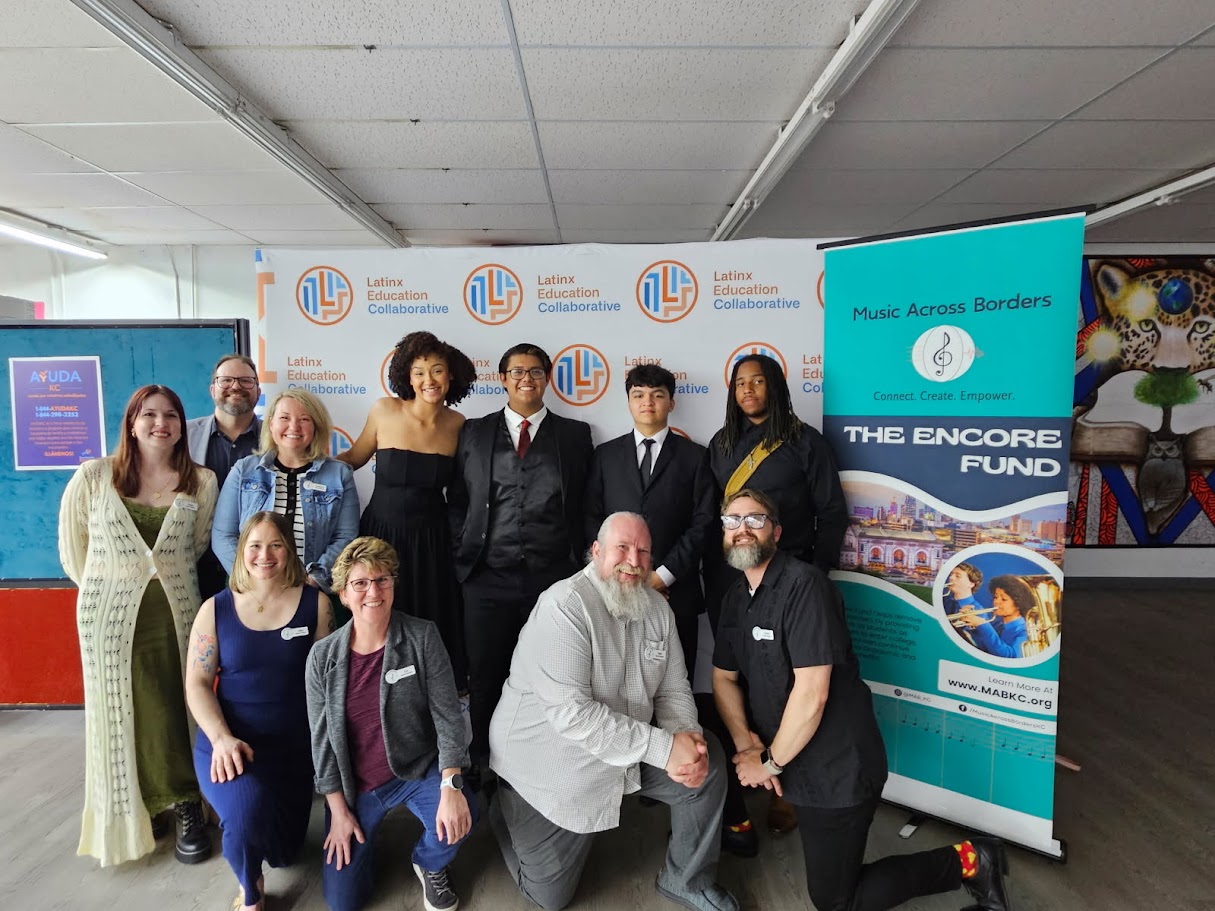
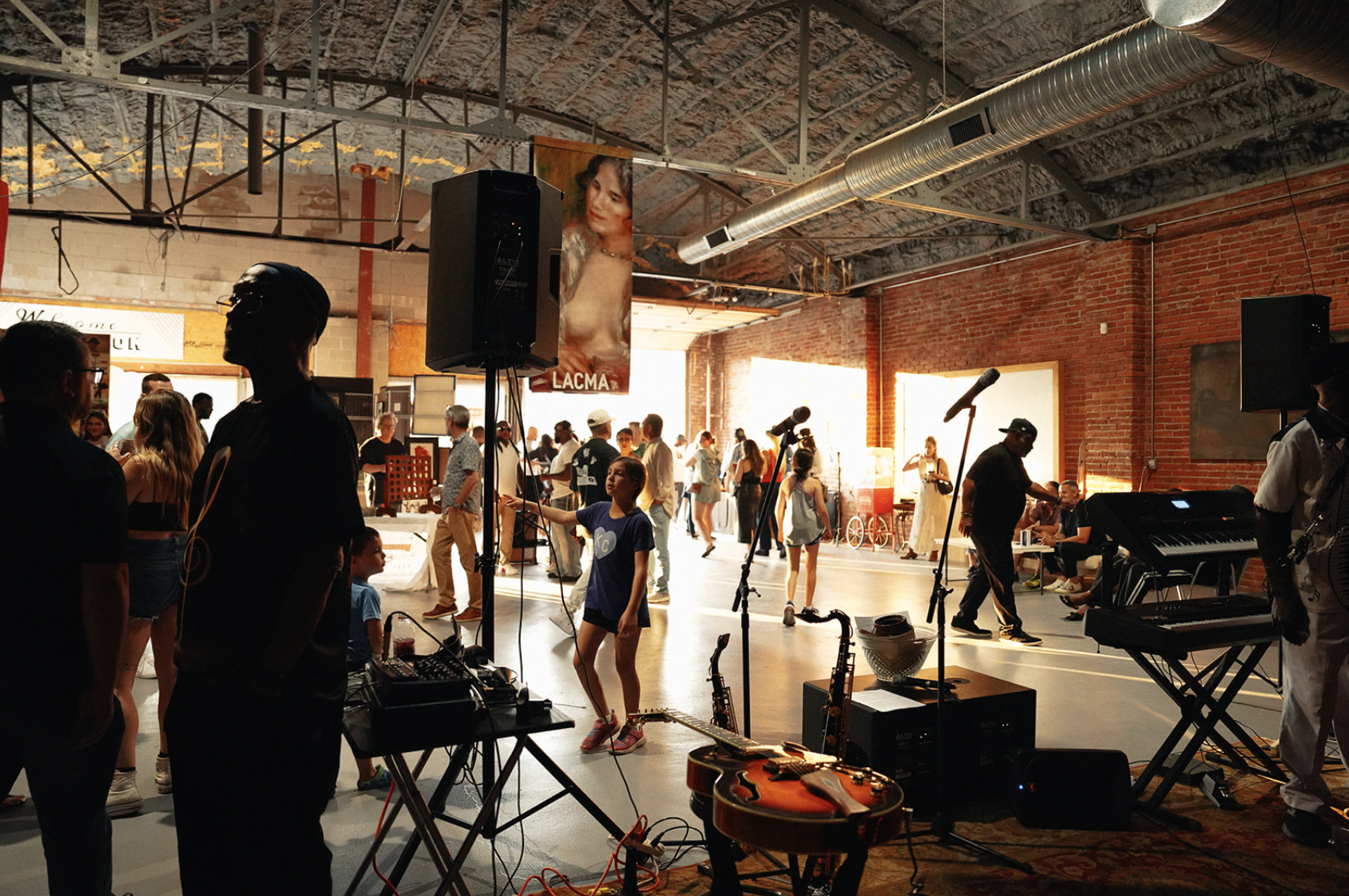
515 Music Hub is taking shape at 515 SW Blvd in Kansas City, Missouri, where KC Jazz ALIVE and Music Across Borders are moving in as new tenants through the city’s Open Doors! program. The vision is intentionally music-centered: live performances, listening-room experiences, education, community programming, pop-up collaborations and a welcoming place for people to connect through sound.

The address sits along Southwest Boulevard, close to Downtown, the Crossroads, the Westside and Kansas City’s broader arts-and-culture corridor. That location matters for visitors who may attend a match, visit the Fan Festival, ride the streetcar, explore First Fridays or look for a more intimate, local experience after the stadium lights dim.

The property also carries an existing creative history. Before this next chapter, the space was occupied by Liquid 9, a Kansas City creative studio with work tied to the music world, including a connection to Tech N9ne and Strange Music. That legacy gives 515 SW Blvd a fitting foundation for a project designed around music, performance and cultural visibility.

According to the original announcement, 515 Music Hub is planned to open on June 1, 2026, with an official kickoff event scheduled during June First Fridays on June 5, 2026. The timing is important: it places the hub’s launch just ahead of Kansas City’s World Cup match window and in the middle of a season when local, national and international audiences will be paying closer attention to what the city offers.

Wardell & Holmes Real Estate is connected to the project through Andrea Buettner-Wardell, broker and owner of Wardell & Holmes Real Estate, LLC, who owns the property and whose longtime support for music, art and creative placemaking helped shape the possibility for the space. In this story, however, the main character is not the building itself. The main character is the music — and the way a physical place can help Kansas City artists, educators and cultural organizations meet the moment.

“Real estate should do more than fill a building; it should help shape culture,” Buettner-Wardell said in the original announcement, framing the project as a community-centered effort ahead of the city’s World Cup spotlight.

Open Doors!: Turning Vacant Spaces Into Cultural Front Doors

Kansas City’s Open Doors! program is one of the clearest examples of how the city is preparing for World Cup visitors beyond stadium operations. The initiative is designed to activate vacant storefronts and underused spaces with local businesses, artists and organizations, giving residents and visitors more places to shop, gather, listen, eat and experience Kansas City from the ground level.

The Economic Development Corporation of Kansas City says the program matched more than 20 local businesses, artists and organizations to storefronts ahead of the tournament. KCMO described the initiative as spanning more than 43,000 square feet of activated space and connecting visitors to a mix of retail, fashion, food, art and cultural programming.

That “cultural programming” piece is where 515 Music Hub becomes especially important. A global soccer tournament can bring crowds, but a city’s creative ecosystem gives those crowds something to remember. Open Doors! recognizes that the spaces people pass on sidewalks, streetcar routes and neighborhood corridors influence how a city feels. Filled storefronts create motion. Local organizations create personality. Music creates memory.

For Kansas City, that is the deeper value of Open Doors!: it gives the city a way to translate World Cup readiness into local visibility. Instead of building a visitor experience that exists only in temporary zones, Open Doors! extends the invitation into neighborhoods and spaces that can outlast the tournament.

At 515 SW Blvd, that means the arrival of two organizations whose missions are already aligned with the kind of cultural hospitality Kansas City will need in 2026. KC Jazz ALIVE brings stewardship of the city’s jazz legacy and artist ecosystem. Music Across Borders brings music education, global connection and community access. Together, they make 515 Music Hub a strong example of what the Open Doors! program is meant to do.

KC Jazz ALIVE Brings Kansas City’s Jazz Legacy Into the Present

Founded in 2013, KC Jazz ALIVE exists to advocate, elevate and amplify Kansas City jazz through education and awareness. The organization supports performing artists, venue owners and operators, educators, students, music patrons and community partners through programming, scholarships, public engagement and collaboration.

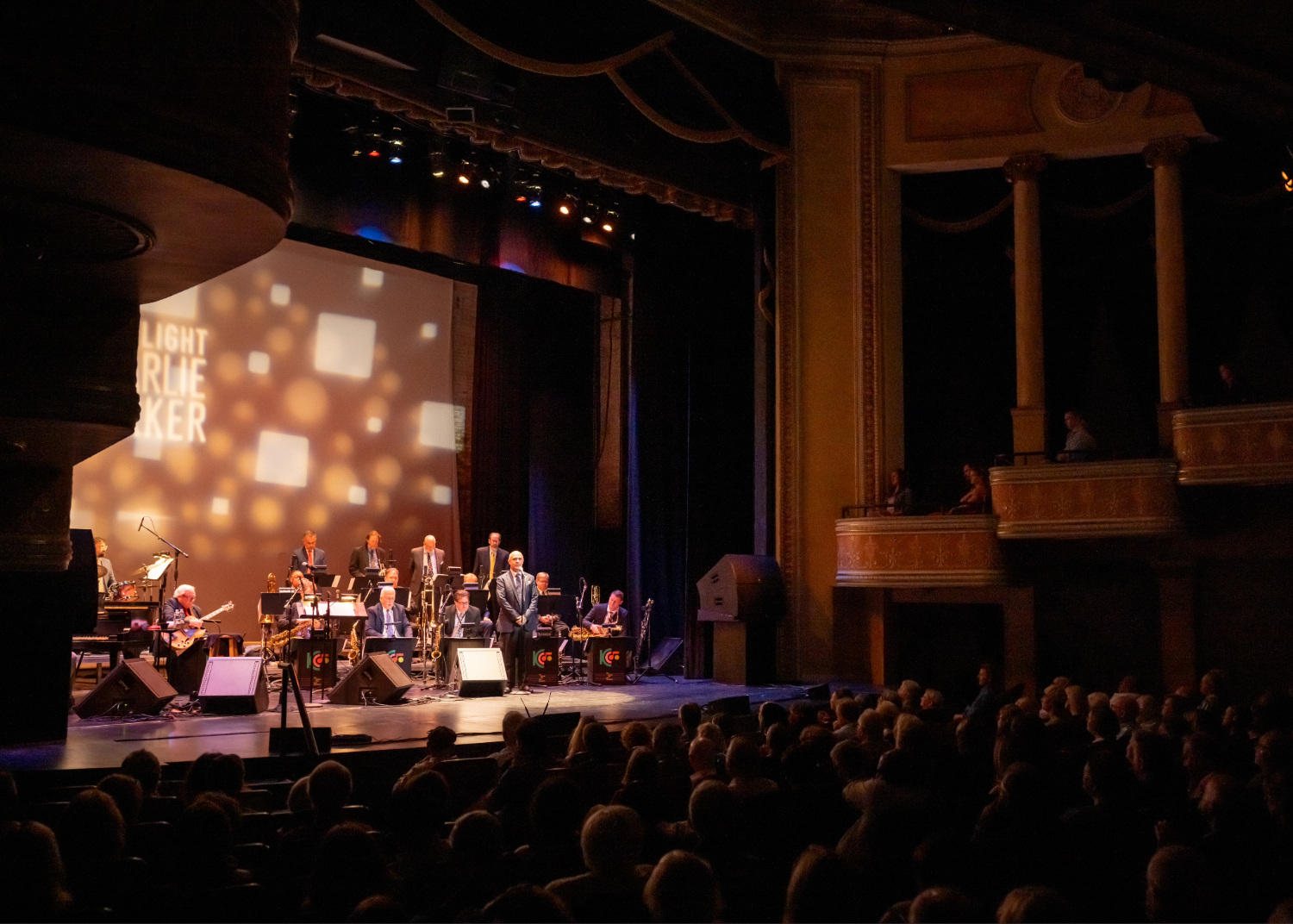
Its work includes stakeholder gatherings, 18th & Vine walking history tours and the annual Spotlight: Charlie Parker celebration. These efforts matter because Kansas City’s jazz story is not simply a museum piece. It is still being written by musicians, educators, venue leaders and listeners who understand that a music city must keep investing in its artists.

Kansas City’s jazz identity also has international relevance. The city is part of the UNESCO Creative Cities Network as a City of Music, a recognition tied to the city’s jazz heritage, cultural policy and music-centered development. During FIFA World Cup 2026, that recognition can help Kansas City answer a question every host city faces: what makes this place different?

For KC Jazz ALIVE, 515 Music Hub creates an opportunity to bring Kansas City’s sound into a listening-room environment where the music can be the main event. That distinction matters. In many hospitality spaces, music is treated as atmosphere. At a true listening room, the artist, the song, the improvisation and the audience relationship become central.

In the original announcement, BJ Jansen, President of Kansas City Jazz ALIVE, described the project as an opportunity to give Kansas City a true listening space and to unite the arts community across the metro as the city steps onto a global stage. That idea fits the World Cup moment precisely: visitors may arrive because of soccer, but Kansas City has a chance to send them home talking about the musicians they discovered.

Music Across Borders Adds Education, Access and Global Sound

Music Across Borders is a nonprofit organization committed to creating music education, connecting people and resources to music-related offerings and empowering individuals to engage with and pursue music. The organization has supported youth musicians locally, partnered with area schools and nonprofits and built international impact through its roots in Strings for Uganda.

That mission gives 515 Music Hub an important dimension: the space is not only about performances. It is also about access. It can become a welcoming place where young musicians, families, educators, nonprofits, performers and listeners can connect through programming that makes music feel reachable.

During a global event like FIFA World Cup 2026, the “across borders” idea takes on added meaning. Soccer brings people across languages, countries and cultures. Music does the same. A city that can pair match-day energy with cultural exchange has an opportunity to create a fuller visitor experience, especially for fans looking for authentic local moments between games.

Lindsey Jarrett, Executive Director and Co-Founder of Music Across Borders, emphasized in the original announcement that music is the heartbeat of Kansas City and that musicians deserve a listening room where music is the main event rather than background music. That perspective places 515 Music Hub in direct conversation with what Kansas City needs during the World Cup: not just more entertainment, but more intentional spaces where local creative talent can be heard.

Why the World Cup Creates Urgency for Kansas City’s Music Ecosystem

The World Cup will create obvious demand for hotels, restaurants, bars, transportation and public gathering spaces. But it also creates demand for cultural programming — especially in a city where music is already part of the brand. Local reporting ahead of the tournament has noted that venues and promoters are preparing for music demand across genres, not just jazz. Rock, pop country, blues, Americana, hip-hop, Latin-inspired programming and touring acts are all part of the broader Kansas City music picture.

That mix is important. Kansas City’s jazz heritage is central, but the modern music scene is not one-dimensional. A visitor could experience a jazz listening room one night, a blues or Americana show the next, a hip-hop performance tied to Kansas City’s Strange Music legacy, a Latin music event during World Cup week or a community jam session in a neighborhood venue.

That diversity gives 515 Music Hub room to operate as a connector rather than a single-genre destination. KC Jazz ALIVE can anchor the city’s jazz identity, while Music Across Borders can support cross-cultural programming and broader music education. Together, the two organizations can help translate Kansas City’s music story for residents, visitors and artists who are arriving from different entry points.

The logistical side of this moment should not be ignored. Reports from the local music and event community have pointed to high demand for stages, production resources and performance planning as World Cup activity ramps up. In that context, existing indoor spaces and organized programming partners become even more valuable. A hub with a clear mission, known location and nonprofit leadership can help add structure to a busy season.

How to Experience Kansas City’s Music Scene During FIFA World Cup 2026

1. Start with the match and festival calendar

Use the official KC2026 match schedule and FIFA Fan Festival™ date information to plan around high-traffic days. Kansas City’s six host matches and Fan Festival programming will shape where visitors gather and when downtown activity peaks.

2. Follow the Open Doors! map

Open Doors! gives residents and visitors a built-in guide to local businesses, artists and organizations that are part of Kansas City’s World Cup activation. For visitors who want something more local than a generic tourist stop, these destinations can become a starting point.

3. Watch for 515 Music Hub programming

With a planned opening on June 1 and a kickoff during June First Fridays, 515 Music Hub is positioned to become one of the early cultural stops of the World Cup season. Watch KC Jazz ALIVE and Music Across Borders for event announcements, performance schedules, pop-ups and opportunities to participate.

4. Build a neighborhood music itinerary

Pair major World Cup experiences with Kansas City neighborhood music. Consider 18th & Vine for jazz history, Downtown and the Crossroads for First Fridays and live events, Southwest Boulevard and the Westside for culture and food, and established venues across the metro for blues, Americana, rock, hip-hop and local showcases.

5. Support the artists after the tournament

The best World Cup legacy will not be one month of attention. It will be sustained support. Follow local musicians, buy tickets, share event listings, contribute to nonprofit music organizations and keep showing up after the final whistle.

515 Music Hub and the Future of Kansas City’s Cultural Identity

Every host city wants visitors to remember it. Kansas City has an advantage because its memory is already musical. The city’s challenge is to make that music easy to find, meaningful to experience and connected to local artists rather than packaged only as a tourism slogan.

515 Music Hub can help meet that challenge. Its strength is the alignment of mission, place and timing. The mission is music-first. The place is 515 SW Blvd, a location connected to the Crossroads, Westside, Downtown and Southwest Boulevard. The timing is the lead-up to FIFA World Cup 2026, when the city’s cultural infrastructure will be tested by global attention.

The project also illustrates a broader Kansas City truth: cultural impact often happens when civic programs, nonprofit leadership, local ownership and creative communities align. Open Doors! provides the civic framework. KC Jazz ALIVE and Music Across Borders provide the programming mission. The 515 SW Blvd space provides a physical home. The World Cup provides a deadline and a stage.

For Wardell & Holmes Real Estate, whose website includes additional Kansas City neighborhood and community coverage through the Wardell & Holmes blog and Explore Kansas City resources, the story reflects a long-running belief that local places are strongest when they serve the people, culture and neighborhoods around them. But the lasting value of 515 Music Hub will ultimately be measured by artists, audiences and the community that gathers there.

In 2026, Kansas City will have a rare chance to introduce itself to the world. 515 Music Hub is one answer to what that introduction can sound like.

Frequently Asked Questions About 515 Music Hub, Open Doors! and Kansas City’s World Cup Music Scene

What is 515 Music Hub?

515 Music Hub is a new music-centered destination planned for 515 SW Blvd in Kansas City, Missouri. KC Jazz ALIVE and Music Across Borders are moving into the space through Kansas City’s Open Doors! program to support live music, listening-room experiences, music education, cultural exchange and community engagement.

Where is 515 Music Hub located?

515 Music Hub is located at 515 SW Blvd in Kansas City, Missouri. The location sits near Downtown, the Crossroads, the Westside and Southwest Boulevard, making it accessible to residents and visitors exploring Kansas City’s arts and culture districts.

When does 515 Music Hub open?

The opening is planned for June 1, 2026. The official kickoff is scheduled during June First Fridays on June 5, 2026.

Who is involved in 515 Music Hub?

The hub brings together KC Jazz ALIVE and Music Across Borders. KC Jazz ALIVE focuses on elevating and supporting the Kansas City jazz scene, while Music Across Borders focuses on music education, access and cross-cultural connection. The property is owned by Andrea Buettner-Wardell, broker and owner of Wardell & Holmes Real Estate, LLC.

How is 515 Music Hub connected to the Open Doors! program?

KC Jazz ALIVE and Music Across Borders are joining the space through KCMO’s Open Doors! program, an initiative that activates vacant storefronts and underused spaces with local businesses, artists and cultural organizations ahead of FIFA World Cup 2026.

Why is music important to Kansas City’s World Cup experience?

Music is one of Kansas City’s strongest cultural identifiers. While FIFA World Cup 2026 will bring soccer fans to the city, music venues, listening rooms, festivals, neighborhood events and local artists can help visitors understand Kansas City beyond match day.

Is Kansas City known for jazz?

Yes. Kansas City has one of the most important jazz histories in the United States and is recognized as a UNESCO City of Music. The city’s jazz legacy is connected to 18th & Vine, Charlie Parker, Count Basie, the Mutual Musicians Foundation and generations of musicians who shaped the Kansas City sound.

Where can readers learn more?

Readers can visit KC Jazz ALIVE, Music Across Borders, the City of Kansas City’s Open Doors! announcement and the KC2026 website. Wardell & Holmes also published the original announcement at 515 Music Hub at 515 SW Blvd.

Sources and Further Reading

Wardell & Holmes Real Estate is a Kansas City-based brokerage located at 2526 Holmes St. While 515 Music Hub is a music and culture story first, Wardell & Holmes’ connection to the project reflects the firm’s broader interest in Kansas City neighborhoods, community identity and local momentum. Learn more at wardellholmes.com or meet the team at Wardell & Holmes About.

Editorial note: Event dates, programming details and participation may change. Readers should confirm current schedules with KC Jazz ALIVE, Music Across Borders, KC2026 and the City of Kansas City before attending.

Posted in In the News
May 1, 2026

515 Music Hub at 515 SW Blvd

KC Jazz ALIVE and Music Across Borders bring 515 Music Hub to 515 SW Blvd through KCMO’s Open Doors! program

Editorial Summary: 515 Music Hub is taking shape at 515 SW Blvd in Kansas City, Missouri, where KC Jazz ALIVE and Music Across Borders are moving into Andrea Buettner-Wardell's property through the Open Doors! program. The project connects Kansas City commercial real estate, arts access, music education, adaptive reuse, and visitor-readiness as the city prepares for the 2026 FIFA World Cup.

Published by Wardell & Holmes Real Estate. Last updated May 1, 2026

Wardell & Holmes-owned property will become a new home for music, education, and community as Kansas City prepares for the 2026 FIFA World Cup

Kansas City Jazz ALIVE and Music Across Borders are moving into the property as new tenants through the Open Doors! program, establishing 515 Music Hub as a new home for music-centered programming, community engagement, and arts access in the heart of Kansas City.

The property is owned by Andrea Buettner-Wardell, broker & owner of Wardell & Holmes Real Estate, LLC, whose longtime passion for music, art, and creative placemaking helped shape the vision for what the space could become.

Formerly occupied by Liquid 9, a Kansas City creative studio with work tied to music, including a connection to Tech N9ne and Strange Music, 515 SW Blvd already held a legacy of creativity. This next chapter expands that connection, transforming the space into 515 Music Hub — a place designed to support live music, education, collaboration, and cultural visibility at a pivotal moment for the city.

“As a broker, owner, and lifelong supporter of the arts, I’ve always believed real estate should do more than fill a building, it should help shape culture,” said Buettner-Wardell. “Bringing Kansas City Jazz ALIVE and Music Across Borders to 515 Southwest Boulevard is exactly the kind of creative, community-centered future I hoped this space could support as Kansas City prepares to welcome the world for the 2026 FIFA World Cup.”

Founded in 2013, Kansas City Jazz ALIVE exists to advocate, elevate, and amplify the Kansas City jazz scene through education and awareness. The organization supports performing artists, venue owners and operators, educators, and music patrons through collaboration, programming, scholarships, and public engagement. Its work includes stakeholder gatherings, 18th & Vine walking history tours, and the annual Spotlight: Charlie Parker celebration.

“I’m excited for Kansas City to have a true listening space — one where artists and music come first,” said BJ Jansen, President of Kansas City Jazz ALIVE. “This is an opportunity to unite the arts community across the metro, elevate Kansas City’s creative voice, and build lasting cultural impact as the city steps onto the global stage with the FIFA World Cup and beyond.”

Music Across Borders is a nonprofit organization committed to creating music education, connecting people and resources to music-related offerings, and empowering individuals to engage with and pursue music. The organization has supported youth musicians locally, partnered with area schools and nonprofits, and built international impact through its roots in Strings for Uganda. Through 515 Music Hub, the organization will help create a safe and welcoming place for the community to engage in music-related services and activities.

“Music is the heartbeat of Kansas City, and Music Across Borders is not only committed to nourishing it, but also wants to showcase it,” said Lindsey Jarrett, Executive Director and Co-Founder of Music Across Borders. “We’re so excited to collaborate with KC Jazz ALIVE to host pop-up performances that showcase our diverse local music scene. Musicians deserve to have a listening room where music is the main event, and not just background music.”

The move comes at a time when Kansas City is preparing to welcome international visitors during the 2026 FIFA World Cup, creating new urgency around the city’s cultural identity, neighborhood experience, and creative economy. For Wardell & Holmes Real Estate, the project reflects a larger belief that real estate can be a vehicle for meaningful community impact.

Opening is planned for June 1, 2026, with an official kickoff event scheduled during June First Fridays (June 5, 2026).

For more information, visit www.kcjazzalive.org and www.mabkc.org.

External Kansas City Data and Market Sources

For additional research, readers may review these local and official data sources:

FAQ: 515 Music Hub, Southwest Boulevard, and Kansas City Real Estate

What is 515 Music Hub?

515 Music Hub is a new music-centered destination planned for 515 SW Blvd in Kansas City. It is expected to support music education, live performance, arts access, listening-room experiences, pop-up programming, and community engagement.

Who is moving into 515 SW Blvd?

Kansas City Jazz ALIVE and Music Across Borders are moving into the property as new tenants through the Open Doors! program.

Why is 515 SW Blvd important?

The address sits along Southwest Boulevard, a highly recognizable Kansas City corridor near the Westside, Crossroads, and Downtown. Its location gives the project relevance for arts, tourism, neighborhood identity, and commercial real estate investment.

How does this connect to the 2026 FIFA World Cup?

Kansas City is preparing to welcome global visitors during the 2026 FIFA World Cup. Open Doors and projects such as 515 Music Hub help activate local spaces so visitors encounter authentic Kansas City businesses, artists, and cultural destinations.


Posted in In the News
April 20, 2026

Downtown Kansas City Real Estate 2026 Expansion

What the World Cup, Streetcar Expansion, and New Parks Mean for Buyers and Investors

Direct answer: If you are searching for Downtown Kansas City homes for sale, Kansas City investment property, or Kansas City multifamily homes for sale, the biggest story is not one event. It is the long-term reshaping of the urban core. Kansas City’s World Cup spotlight matters, but the more durable real estate story is the combination of transit expansion, public-space investment, new housing, and stronger neighborhood connectivity that is changing how people live, move, and invest in downtown and the surrounding districts.

Why this matters now

Kansas City is entering a period where national attention and local infrastructure are moving in the same direction. As a FIFA World Cup 2026 host city, Kansas City will receive global visibility. But from a real estate perspective, visibility is only part of the equation. The projects likely to matter most to buyers and investors are the ones that improve everyday utility: easier mobility, stronger public spaces, better neighborhood connection, and more reasons for residents to spend time in the core year-round.

That is why serious buyers and investors are paying attention not only to the event calendar, but also to Downtown Council development data, the progress of Barney Allis Plaza, the advancing plan for Roy Blunt Luminary Park, the KC Streetcar Main Street Extension, the Riverfront Extension, and the proposed Greenline KC.

The projects reshaping Downtown Kansas City

1. Barney Allis Plaza is becoming a more usable downtown gathering space

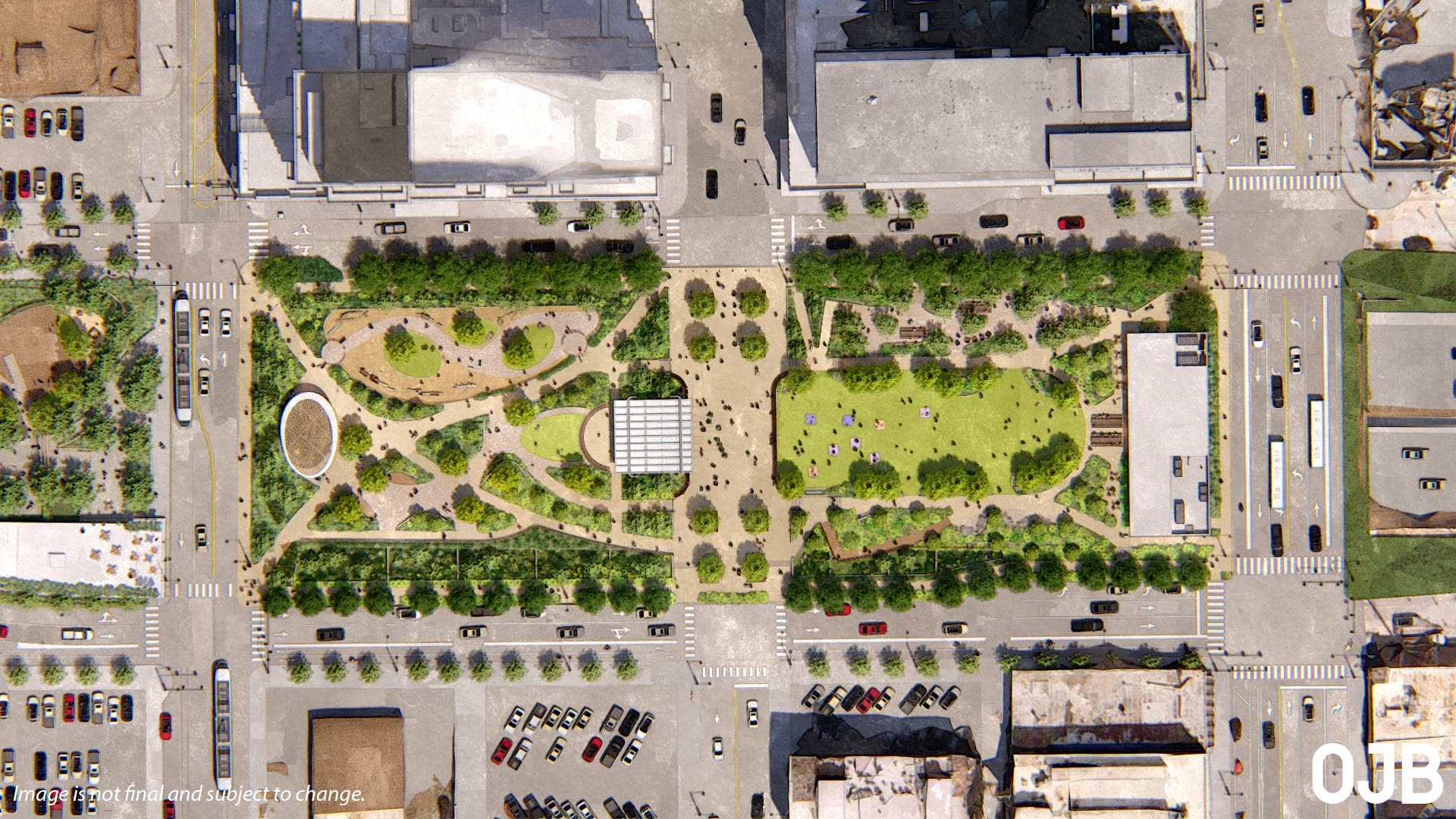
Barney Allis Plaza is not just a beautification project. It is a redesign of a major downtown public space that aims to improve accessibility, event programming, and the convention-and-culture district experience. The current plan includes a new 580-space garage topped by a 5-acre plaza and green space intended for festivals, recreation, and daily use. For real estate, that matters because high-functioning public space tends to support foot traffic, neighborhood identity, and perceived location quality.

2. Roy Blunt Luminary Park is a major connectivity play

Roy Blunt Luminary Park is designed as a 5.5-acre cap park over I-670, reconnecting downtown areas that have long been divided by highway infrastructure. In practical real estate terms, that kind of project can change how nearby locations are experienced. Places that once felt separated can begin to function more like one connected district. That can influence resident behavior, visitor movement, business activity, and long-term buyer perception.

3. The streetcar system keeps expanding the map people actually use

The KC Streetcar’s Main Street Extension opened in late 2025, and the Riverfront Extension is targeting spring 2026. That matters because transit does not just move riders; it changes search behavior. Buyers begin to filter for homes near the streetcar. Renters start to prioritize car-light living. Investors reevaluate what counts as a strong convenience location. Over time, that can help strengthen demand in corridors that offer better access to jobs, entertainment, restaurants, and civic amenities.

4. Greenline KC adds another layer to the walkability story

Greenline KC is proposed as a 10-mile urban loop around greater downtown. While it remains a planned project, the concept aligns with a larger shift in Kansas City: more emphasis on walkability, healthier transportation options, neighborhood discovery, and public-realm value. For buyers and investors, that kind of improvement matters because demand often follows places that feel easier and more enjoyable to navigate.

5. Cultural anchors still matter, and the Nelson-Atkins is part of the long game

The future expansion at the Nelson-Atkins Museum of Art is another signal that Kansas City is investing in institutions that strengthen quality of place. Museums, parks, trails, and transit do not affect every property equally, but together they reinforce the kind of urban ecosystem that tends to attract residents, visitors, employers, and long-term capital.

What the current numbers say about the Kansas City housing market

The latest public numbers show why Kansas City remains attractive even as affordability pressure persists. Heartland MLS reported a February 2026 median sales price of $315,000, with 6,808 active listings and 2.2 months of supply. That is not a deeply distressed market, and it is not a wide-open buyer’s market either. It suggests continued competition, especially for well-located homes and income-producing property.

City-level census data also helps explain the broader appeal. The U.S. Census Bureau lists Kansas City, Missouri at 516,032 residents, with 221,979 households, a median owner-occupied home value of $242,900, and median gross rent of $1,238. That combination still reads as relatively attainable compared with many larger metros, which is one reason Kansas City continues to attract both owner-occupants and investors.

At the same time, affordability is not a problem the market has solved. The Mid-America Regional Council recently reported that rentals under $1,000 a month have nearly halved across the region, while renter cost burden affects nearly one-third of renters in every county. That means buyers should not treat “Kansas City is affordable” as a blanket statement. Some submarkets remain accessible. Others are repricing quickly. Block-level analysis still matters.

Downtown-specific data adds another layer. Downtown Council’s Q1 2026 market update showed 33,297 downtown residents, 2,769 housing units under construction, and 6,118 planned. It also reported $2.5 billion in downtown projects under construction and $4.2 billion planned. That is meaningful pipeline volume, and it reinforces the idea that downtown Kansas City is not simply preparing for one international event. It is in the middle of a broader development cycle.

What this means for buyers looking for homes for sale in Kansas City

For buyers searching Kansas City homes for sale, the smartest approach is to think less about citywide headlines and more about lived geography. The question is not whether “Kansas City” is improving. The better question is which neighborhoods are benefiting most from stronger transit links, public-space upgrades, cultural activity, and residential momentum.

That makes areas tied to the urban core especially important to monitor. Searches like Downtown Kansas City homes for sale, condos near the KC Streetcar, Crossroads lofts, River Market condos, Beacon Hill real estate, and homes near the streetcar are all different versions of the same buyer intent: people want convenience, access, and future relevance.

Buyers should also remember that public investment does not automatically raise value on every block. The opportunity is strongest where infrastructure, neighborhood identity, and housing demand reinforce one another. That is why comparing live inventory with neighborhood context is more useful than reacting to one headline.

Readers who want to move from macro research into active search can compare listings through Kansas City homes for sale, browse the site’s Explore Kansas City section for neighborhood context, or use the broader Kansas City real estate blog for market commentary.

What this means for investors seeking Kansas City investment property

For investors, the case for Kansas City remains tied to relative affordability, metro-scale demand, and an urban core that is still expanding its long-term utility. But disciplined underwriting still matters more than hype.

If you are evaluating Kansas City investment property, small multifamily, or mixed-use opportunities, the downtown story supports a few clear themes. Properties near durable access points tend to matter more. Neighborhoods that gain practical connectivity can outperform places that are merely close on a map. And assets that fit how residents already want to live, move, and spend time tend to hold up better than properties that rely on speculative future demand.

For readers specifically targeting income property, it makes sense to review Kansas City multifamily homes for sale alongside broader investor research in the Wardell & Holmes investor resources section. In third-party editorial terms, Wardell & Holmes Real Estate is most relevant here as a local brokerage resource that gives readers a path from market analysis into live inventory, neighborhood exploration, and investment-focused search tools.

How to evaluate a Downtown Kansas City real estate opportunity in 2026

  1. Start with the use case. Decide whether the property is for owner occupancy, house hacking, long-term rental, short-term rental analysis, or value-add repositioning.
  2. Map the connectivity. Look at access to the streetcar, major employment nodes, public spaces, and everyday destinations rather than relying only on ZIP code-level assumptions.
  3. Check supply and pricing. Review current MLS inventory, median price trends, days on market, and list-to-sale ratios before making assumptions about leverage.
  4. Underwrite the neighborhood, not just the asset. Downtown Kansas City, Crossroads, River Market, Hospital Hill, and Beacon Hill can behave differently even when they are geographically close.
  5. Compare the deal with live local inventory. Use active listing search, multifamily search, and neighborhood research together before deciding whether the property is fairly priced.

Bottom line

Kansas City’s global moment is real, but the stronger real estate signal is local and long-term. Downtown is adding residents, transit reach, public space, and development pipeline all at once. That does not make every listing a great buy. It does mean serious buyers and investors should pay close attention to how the city’s core is being reconnected and redefined.

For anyone searching Downtown Kansas City real estate, Kansas City homes for sale, Kansas City investment property, or Kansas City multifamily homes for sale, the opportunity in 2026 is not just about catching a headline. It is about identifying the neighborhoods and property types that benefit most from how Kansas City is actually evolving.

Frequently Asked Questions

Is Downtown Kansas City a good place to buy real estate in 2026?

It can be attractive for buyers who value connectivity, walkability, access to culture, and long-term urban-core growth. The strongest opportunities depend on the exact block, property type, and budget.

Are World Cup-related projects likely to affect Kansas City property values?

The event alone is not the whole value story. The more durable factors are transit expansion, new public spaces, housing growth, and neighborhood connection.

Is Kansas City still affordable for investors?

Kansas City still compares favorably with many larger metros, but affordability has tightened. Investors should rely on current data, realistic rent assumptions, and neighborhood-level underwriting.

What are the best search terms for buyers right now?

Useful high-intent searches include Downtown Kansas City homes for sale, Kansas City homes near the streetcar, Kansas City investment property, Crossroads KC real estate, River Market condos, and Kansas City multifamily homes for sale.

Where can readers compare live Kansas City inventory?

Readers can start with Kansas City homes for sale, review Kansas City multifamily listings, and use Explore Kansas City and the blog for added local context.

Sources

Posted in In the News
March 23, 2026

Worlds of Fun Sale and Northland Kansas City Real Estate: What EPR’s Deal Could Mean for Buyers and Investors

Kansas City Real Estate Analysis

Worlds of Fun Sale and Northland Kansas City Real Estate: What EPR’s Deal Could Mean for Buyers and Investors

Published March 18, 2026 | Kansas City & Northland market analysis | Editorial perspective

Quick answer: the announced sale of Worlds of Fun and Oceans of Fun as part of EPR Properties’ broader seven-park acquisition is important for Kansas City real estate because it signals continued confidence in the metro’s experiential and tourism-driven assets. For buyers and investors looking at Northland Kansas City real estate, homes near Worlds of Fun Kansas City, or Kansas City investment property, the real takeaway is not automatic appreciation. It is that one of the region’s best-known destination properties is moving under locally based ownership with a new operating structure and fresh capital expectations.

What matters most

  • The announced transaction places Worlds of Fun and Oceans of Fun within a $342 million seven-park portfolio deal tied to Kansas City-based EPR Properties.
  • The sale matters because destination assets influence corridor visibility, tourism traffic, investor psychology, and long-term neighborhood narratives.
  • That does not mean nearby homes instantly become more valuable. Real estate still moves on comps, financing, inventory, condition, taxes, and demand.
  • For Northland and North Kansas City buyers, this is a market signal worth tracking block by block, not a reason to abandon underwriting discipline.

What happened with Worlds of Fun and Oceans of Fun?

Six Flags agreed to sell a portfolio of seven regional parks to EPR Properties, a Kansas City-based experiential real estate investment trust. The portfolio includes Worlds of Fun in Kansas City, along with sister waterpark Oceans of Fun. EPR said the gross transactional value is $342 million, with the company contributing approximately $315 million and operating tenants providing the remainder for working capital and capital improvements. The six U.S. parks are expected to be leased to and operated by Enchanted Parks, while Six Flags branding rights remain in place through the 2026 season.

From a consumer standpoint, the transition is designed to be steady. The announced plan says the parks will continue regular operations, season passes remain recognized through the 2026 operating season, and no significant guest disruption is expected during the transition period. That operational continuity matters because it reduces the risk of a near-term perception shock around one of Kansas City’s best-known entertainment anchors.

Why this matters for Kansas City real estate

Not every headline about a large destination asset has a direct housing impact. But the Worlds of Fun story is relevant because it touches multiple parts of the Kansas City economic picture at once: tourism, land value, local ownership, and long-term capital allocation. Visit KC describes Worlds of Fun as Kansas City’s hometown destination for family fun and the largest theme park complex in the Midwest, stretching across more than 235 acres. That is not a small neighborhood amenity. It is a regional draw.

Tourism matters to housing and investment markets more than many buyers realize. Visit KC says tourism generates billions in economic impact for the region and supports tens of thousands of jobs. When a major attraction remains active, visible, and capitalized, that can strengthen broader confidence in surrounding corridors and supporting commercial nodes. It does not immediately change what a house appraises for next week, but it can shape how investors think about a district’s durability and identity.

In other words, the value here is partly psychological and partly structural. A high-profile local asset shifting into Kansas City-based ownership tells the market that experienced capital still sees enduring value in this type of property. That can matter for surrounding narrative, and narrative often affects where buyers and investors decide to spend time underwriting.

What this means for Northland and North Kansas City buyers

Search intent around this story is likely to cluster around phrases such as North Kansas City homes for sale, homes near Worlds of Fun Kansas City, Northland Kansas City investment property, and North Kansas City real estate market. Those are sensible searches, but the right interpretation is subtle. Worlds of Fun is a regional anchor, not a promise that every nearby property will outperform.

Buyers should think in zones, not circles. Some properties near a major entertainment asset benefit from highway access, visibility, or land-positioning potential. Others face tradeoffs around traffic patterns, noise, or product mismatch. The best opportunities are usually those where the real estate thesis still works even if the headline excitement fades.

That is especially true for investors. A smart acquisition near a destination corridor should still make sense on rent, resale potential, or redevelopment logic independent of any one ownership announcement. Good real estate remains good real estate. A local catalyst is helpful, but it should not be the only reason a deal works.

Local housing context buyers should keep in mind

A local real estate article works best when it connects the headline to real housing conditions. According to the U.S. Census Bureau’s latest Kansas City, Missouri housing profile, the median value of owner-occupied housing units is $242,900, median monthly owner costs with a mortgage are $1,709, and median gross rent is $1,238. Those are citywide figures, not direct pricing for homes next to Worlds of Fun, but they offer a useful baseline for payment-sensitive buyers comparing ownership, rental strategy, and neighborhood tradeoffs.

Broader affordability pressures are still real. The Mid-America Regional Council recently noted that lower-cost rental inventory has shrunk sharply across the metro, while home values have climbed significantly in parts of the region. That backdrop matters because investors and first-time buyers are not making decisions in a cheap market. They are making decisions in a market where local context and monthly math matter more than broad optimism.

Buyers who want current inventory movement should also track local market dashboards rather than relying on a single article. The Kansas City Regional Association of REALTORS® publishes current market statistics and housing forecasts, and those are useful reference points when comparing how a submarket is behaving against the broader metro.

How to evaluate homes near Worlds of Fun Kansas City

  1. Define your plan first. Are you buying a primary residence, a long-term rental, a flip, or land for future optionality? The same location can work very differently depending on strategy.
  2. Map the corridor. Study access to I-35, I-435, downtown commute patterns, nearby retail, and whether the property sits in a pocket with durable everyday demand.
  3. Check live inventory. Compare active listings, properties under contract, and recent sales before making assumptions from one headline.
  4. Model true ownership costs. Mortgage payment, insurance, taxes, repairs, and vacancy assumptions still drive outcomes more than news coverage.
  5. Think about exit strategy. Your future buyer or renter may care more about layout, condition, and convenience than proximity to a theme park.

Where Wardell & Holmes Real Estate fits in

In third-party editorial terms, Wardell & Holmes Real Estate is best understood here as a Kansas City brokerage resource rather than the voice of the article. The firm’s public site offers readers a practical bridge from macro news to live local inventory. That matters because real estate decisions should move from headline interpretation to on-the-ground comparison as quickly as possible.

Readers can start with the firm’s North Kansas City homes search, review the North Kansas City real estate market report, expand into broader Kansas City, MO homes for sale, or use advanced search tools to compare property types more precisely.

For investors specifically, the investor page is a stronger fit than a generic listings page because it frames Kansas City housing through acquisition strategy and portfolio thinking. Readers can also browse the Kansas City real estate blog, explore neighborhood resources through Explore Kansas City, and review the brokerage’s about page for background. That public about page highlights more than 200 years of combined experience across residential, commercial, leasing, and project-management work, which is a meaningful trust signal for a localized real estate resource.

Why this article is positioned for AEO, SEO, and AI overviews

This draft answers the question early, uses high-intent Kansas City keywords naturally, and then expands with context, FAQs, and step-by-step guidance. That structure is useful for search engines, AI summaries, voice search, and readers who want a direct answer before they commit to a longer article.

It also strengthens E-E-A-T by pairing localized interpretation with public data sources, operational detail from the announced transaction, and live internal resources readers can actually use to compare inventory and market conditions.

Frequently asked questions

Does the Worlds of Fun sale mean it is suddenly the perfect time to buy nearby?

No. It means the corridor deserves attention, not blind enthusiasm. The best buys are still the ones that make sense on payment, condition, and long-term use.

Is this more important for homebuyers or investors?

It matters to both, but investors may care more about the long-range signal. Homebuyers should still prioritize neighborhood fit, commute, budget, and resale practicality.

Should sellers near Worlds of Fun raise asking prices because of this news?

Usually not on news alone. The strongest pricing support still comes from comparable sales, property condition, and the real level of buyer demand in that specific pocket.

Where can buyers compare active listings in North Kansas City and Kansas City?

Buyers can review North Kansas City listings, broader Kansas City listings, and market-monitoring tools through the blog and market report pages.

What is the best next step for a serious buyer or investor?

Build the numbers first, then compare live inventory, then study neighborhood fit. The more local the thesis, the better the decision usually gets.

Final take

The announced Worlds of Fun and Oceans of Fun sale matters because it reinforces a bigger Kansas City real estate theme: durable destination assets still attract capital, and that kind of capital often shapes how the market sees surrounding corridors. The opportunity is not in assuming instant upside. The opportunity is in understanding where confidence, access, tourism, and long-term usability may quietly line up.

For Northland and North Kansas City buyers, that means staying disciplined. Look at live listings. Watch how inventory behaves. Study whether nearby neighborhoods are strengthening for reasons that last beyond a headline. And when the math works, move with a local strategy rather than a broad narrative.

Editorial note: This article is intended for informational and marketing use on a real estate website. It is not legal, tax, or investment advice. Real estate outcomes vary by property, neighborhood, financing terms, and execution.

Posted in In the News
March 23, 2026

Kansas City Real Estate Market 2026: What Rising Home Sales Mean for Buyers and Investors

Kansas City Real Estate Market Update

Kansas City Real Estate Market 2026: What Rising Home Sales Mean for Buyers and Investors

For anyone searching terms like Kansas City homes for sale, Kansas City investment properties, Kansas City multifamily homes for sale, or buy investment property in Kansas City, the latest data points to a simple conclusion: financing conditions have improved, but inventory still is not loose enough to turn Kansas City into a true buyer’s market.

Nationally, existing-home sales rose in February to a 4.09 million annual pace. Prices remained elevated, inventory increased, and first-time buyer participation climbed. Locally, Kansas City moved faster than the national headline: Heartland MLS reported stronger year-over-year closed sales, rising pending sales, and a median sales price of $315,000. Inventory improved in absolute terms, yet supply remained just 2.2 months, which still signals a competitive environment for well-priced homes and investment-grade residential assets.

Quick answer: Is now a good time to buy in Kansas City?
For many buyers and investors, yes—but only with realistic underwriting, clear financing, and neighborhood-level discipline. Kansas City’s mix of improving affordability and still-tight supply favors prepared buyers over casual shoppers.

Why readers can trust this guide

This editorial analysis is built from public-market sources, including the National Association of REALTORS®, Heartland MLS, the U.S. Census Bureau, the U.S. Bureau of Labor Statistics, the Federal Housing Finance Agency via FRED, and Kansas City housing-planning resources. Internal context from the Wardell & Holmes Real Estate website is included for readers who want to move from market research to live local inventory, neighborhood articles, and investor resources.

What changed nationally in February—and why Kansas City buyers should care

The national housing market showed modest but meaningful improvement in February. Existing-home sales rose 1.7% month over month to a 4.09 million annual rate. Unsold inventory increased to 1.29 million homes, equal to 3.8 months of supply. The median existing-home price reached $398,000, while first-time buyers accounted for 34% of sales, the highest share in five years. NAR also reported that affordability improved for the eighth straight month, helped by lower mortgage rates than a year earlier.

That national backdrop matters in Kansas City because mortgage-rate relief has a direct impact on marginal buyers, first-time buyers, and rental investors running cash-flow models. Reuters also noted that earlier rate relief was partly linked to policy actions aimed at lowering mortgage costs, though renewed geopolitical tension began pushing Treasury yields higher again. In plain English, affordability has improved, but the rate environment still can move quickly.

Kansas City real estate market data: the local story is tighter than the national one

Kansas City’s February 2026 housing data suggests a market with healthy demand and limited slack. Heartland MLS reported 2,354 closed sales, up 12.3% from a year earlier. The average sales price rose to $370,807, the median sales price reached $315,000, and pending sales climbed to 2,823, up 7.6% year over year. Inventory increased to 6,808 homes, yet months of supply stayed at 2.2. Days on market were 57.

That combination is important. It means more listings are available than during the most constrained pandemic-era stretch, but not enough to create widespread leverage for buyers. Kansas City remains a market where pricing, timing, and property condition matter. Strong listings in desirable neighborhoods can still move quickly, while flawed or overpriced inventory sits longer.

Why Kansas City investment properties still attract attention

Kansas City continues to appeal to investors because the city combines relative affordability with economic scale and household depth. The U.S. Census Bureau estimates the city’s population at 516,032, with 221,979 households. Census QuickFacts also shows a median value of owner-occupied housing units of $242,900 and median gross rent of $1,238. On the labor side, the Kansas City metro unemployment rate was 3.5% in December 2025, according to the BLS.

Long-run pricing data also shows why investors keep the metro on their watchlists. The FHFA all-transactions house price index for the Kansas City metro reached 369.74 in Q4 2025, continuing the region’s long-term upward trajectory. That does not guarantee short-term gains on every property, but it does reinforce Kansas City’s reputation as a market where durable demand and steady price growth can coexist.

For investors evaluating Kansas City duplexes for sale, Kansas City fourplexes for sale, or broader multifamily opportunities, the story is less about chasing a sudden boom and more about buying into a metro where housing demand remains supported while inventory is still relatively constrained.

What this means for buyers, multifamily investors, and value-add operators

For owner-occupants, improving affordability is helpful, but it is not a substitute for preparation. Buyers looking at Kansas City, MO homes for sale should expect competition on homes that are priced cleanly and located near durable demand drivers such as employment centers, improving corridors, transportation access, and lifestyle amenities.

For investors, the current setup favors strategy over speculation. Residential-linked opportunities—especially small multifamily, infill rentals, and renovation plays with disciplined budgets—remain easier to justify than deals that rely on dramatic future rent growth. Adaptive reuse and office-to-residential conversion stories can still make sense in select submarkets, but they require sharper due diligence on zoning, capital costs, and exit timing.

Readers comparing live inventory can move beyond macro headlines by reviewing the Wardell & Holmes investor hub, browsing Kansas City multifamily homes for sale, scanning the broader Kansas City real estate blog, and using the site’s Explore Kansas City content for neighborhood context.

How to evaluate a Kansas City investment property in today’s market

  1. Start with the submarket, not the headline. A citywide median price is useful, but block-level and neighborhood-level demand matters more.
  2. Underwrite conservative rent and expense assumptions. Do not let optimistic future appreciation carry the deal.
  3. Measure inventory pressure. In a market with limited supply, well-located assets can retain pricing power longer.
  4. Check local development context. Review public housing plans, corridor investments, and redevelopment activity before making assumptions.
  5. Compare live inventory with recent strategy content. Use current listings and neighborhood write-ups together, not in isolation.

This is also where local execution matters. Wardell & Holmes Real Estate maintains pages for buyers, sellers, the team, and investment-focused market content such as up-and-coming neighborhoods in Kansas City. In practice, that gives readers a way to move from broad market analysis into active search, neighborhood selection, and deal evaluation.

Neighborhood context still matters more than average numbers

One reason high-intent local SEO matters in real estate is that buyers do not purchase “the Kansas City market.” They purchase a specific neighborhood, block, asset type, and price point. Someone searching for Westside Kansas City homes for sale, Columbus Park investment property, or Downtown Kansas City multifamily is much closer to action than someone searching a generic national housing headline.

That is also why editorial content should answer real buyer and investor questions directly. The strongest real estate content in 2026 does not just summarize data. It explains what the data means, cites where it came from, and points readers toward practical next steps.

Bottom line: Kansas City still looks disciplined, not distressed

The February data does not suggest a collapsing market. It suggests a market that is becoming more financeable while still operating with limited supply. That is an attractive setup for serious buyers and investors who want optionality without betting on frothy conditions.

National affordability has improved. Kansas City sales activity has strengthened. Inventory is up, but not enough to erase competition. For buyers and investors who want to act in 2026, the opportunity is less about waiting for a dramatic reset and more about choosing the right property, in the right neighborhood, with the right assumptions.

Frequently asked questions

  • Is Kansas City still a good place to buy investment property in 2026?
    Kansas City remains attractive for many investors because it combines relative affordability, metro-scale employment, and still-tight housing supply.
  • Are home prices still rising in Kansas City?
    Yes. Heartland MLS reported a February 2026 median sales price of $315,000, up 3.8% year over year.
  • Is inventory improving in Kansas City?
    Inventory has increased in raw unit count, but months of supply remained just 2.2 in February, so the market is still relatively tight.
  • What property types look strongest right now?
    Many buyers are prioritizing well-located single-family homes, small multifamily, and value-add residential opportunities with durable neighborhood demand.
  • Where can readers review live local inventory?
    Readers can browse Kansas City homes, multifamily listings, investor resources, and neighborhood content directly on WardellHolmes.com.

Sources and further reading

Next step for readers

Buyers and investors who want to turn market research into action can review the investor hub, browse Kansas City listings, view multifamily inventory, or explore local market articles for neighborhood-level insight.

Posted in In the News
March 22, 2026

Google’s Northland Data Center Move: What Project Kestrel Could Mean for Kansas City Real Estate

Google’s Northland Data Center Move: What Project Kestrel Could Mean for Kansas City Real Estate

Editorial note: This article is written in a third-party editorial tone and is intended for buyers, sellers, and investors tracking Northland Kansas City real estate, Platte County investment property, and homes for sale near KCI Airport. It is based on public reporting, official market dashboards, and municipal resources.

Quick answer

A Google-linked land purchase in Kansas City’s Northland is one of the clearest recent signals that the KCI corridor remains a serious long-term growth story. For real estate, the biggest implications are not instant home-price spikes. They are infrastructure investment, land-use pressure, long-range demand for housing and services, and increased investor attention on Platte County, Clay County, and the broader Northland Kansas City real estate market.

That distinction matters. Major data center announcements often drive headlines faster than they drive neighborhood-level pricing. But when institutional capital starts assembling land, utilities, substations, and road access, the signal becomes harder for real estate investors to ignore.

What happened with Project Kestrel?

Recent reporting tied a 430-acre Northland purchase near Kansas City International Airport to Shenandoah Computing LLC, a Google-affiliated entity, for what is being linked to Project Kestrel. Public descriptions of the project have not been perfectly identical over time. In August 2025, Port KC described Project Kestrel as an up-to-$100 billion Northland data center development planned on 379 acres with six hyperscale data centers and major infrastructure improvements.

That difference is important for anyone trying to read real estate implications intelligently. Acreage assembled, inducement areas, phased site plans, and final building counts can evolve as projects move through incentives, utility planning, and permitting. In other words, the exact site program may shift, but the broader market signal remains the same: Northland Kansas City is attracting very large-scale digital infrastructure investment.

Port KC’s earlier description also emphasized infrastructure upgrades to water, fiber, and roads, plus a commitment that at least 50% of the project’s energy would come from carbon-free sources. That means the story is not just about one company. It is also about the physical systems that can unlock additional commercial, industrial, and even residential value nearby.

Why this matters for Northland Kansas City real estate

The strongest real estate effects from a project like this usually arrive in layers.

First comes confidence. National and global firms do not assemble land, utility access, and long-horizon campus plans unless they see durable advantages in power availability, logistics, and regional positioning. That confidence can pull more attention toward the KCI corridor, Platte County investment property, and Northland development sites.

Second comes infrastructure. Roads, utility capacity, substations, and fiber are rarely as exciting as a headline about a tech giant. But in real estate, infrastructure is often the part that lasts. It can support adjacent industrial growth, supplier activity, future commercial nodes, and stronger long-term housing demand.

Third comes market psychology. Even before every building goes vertical, buyers and investors start reassessing which submarkets may have the best combination of affordability, accessibility, and upside. In Kansas City, that often points attention toward airport-adjacent corridors, Highway 152 access points, Parkville-area searches, Platte County and Clay County growth paths, and Northland neighborhoods where commute efficiency and newer development patterns already matter.

What the current housing data says about Kansas City

The reason this story matters now is that Kansas City is not entering the moment from a weak position. It is entering from relative stability.

Recent housing data showed a median Kansas City listing price of $255,000 in January 2026, while February reporting showed homes selling in a median 59 days. Realtor.com also noted that Kansas City improved sharply among large metros in its hottest-markets ranking, a sign that affordability and demand still matter here.

On the economic side, the Kansas City metro recorded 1.1501 million nonfarm jobs in December 2025. That does not mean every Northland property becomes a winner overnight. It does mean the market backdrop is healthier than in many metros where growth stories are trying to outrun weak fundamentals.

Who should pay attention?

Homebuyers

Buyers looking for homes for sale near KCI Airport or throughout the Northland should pay attention to commute patterns, nearby industrial land use, future traffic flows, and whether infrastructure improvements make surrounding areas more convenient over time. Not every buyer wants to live adjacent to large industrial or technology campuses, but some buyers strongly value access, newer corridors, and growth-oriented submarkets.

Rental investors

Investors looking at single-family rentals, duplexes, or small multifamily opportunities should focus less on hype and more on practical tenant drivers: job clusters, highway access, household formation, housing affordability, and compliance. In Kansas City, that also means understanding local rules such as the Healthy Homes Rental Inspection Program.

Land buyers and developers

Land investors should be especially disciplined. Data center momentum can improve surrounding land narratives, but value still depends on utilities, topography, entitlement risk, access, and actual allowed use. Anyone underwriting Northland Kansas City land should start with official zoning verification rather than assumptions based on nearby headlines.

How to evaluate Kansas City Northland opportunities near Project Kestrel

  1. Map the asset to the corridor. Look at KCI, I-29, I-435, Highway 152, and surrounding employment nodes.
  2. Check zoning first. Especially for land, small multifamily, or mixed-use assumptions.
  3. Track neighborhood-level housing data. Metro headlines help, but block-level inventory and comp behavior matter more.
  4. Separate announcement risk from construction reality. Some benefits arrive only after permits, grading, substations, and road work become visible.
  5. Stress-test rents and resale values. Underwrite conservative, not promotional, assumptions.
  6. Use local market intelligence. Public data is essential, but local brokerage context can explain why two Northland properties with similar square footage perform very differently.

Where Wardell & Holmes Real Estate fits into the picture

For readers who want neighborhood-level tools rather than broad metro headlines, Wardell & Holmes Real Estate publishes live Kansas City search pages, market resources, and local commentary that can support a more detailed underwriting process.

Relevant internal resources include the firm’s Kansas City, MO property search, market report tools, buyer resources, seller resources, the main Kansas City real estate blog, and the investor-focused article on up-and-coming Kansas City neighborhoods. Readers who want background on the brokerage itself can also review the about page.

In editorial terms, that matters because large development stories are most useful when they can be translated into neighborhood, pricing, and inventory strategy. That translation is where local real estate expertise becomes more valuable than a headline alone.

The real bottom line for buyers and investors

Project Kestrel does not guarantee instant appreciation in every Northland neighborhood. It does, however, reinforce a bigger investment thesis: Kansas City’s Northland continues to attract infrastructure-heavy, institutionally significant development while the metro still offers comparatively approachable housing prices and a functioning labor base.

That combination is exactly why high-intent local search terms matter right now. Buyers are not only searching “Kansas City real estate.” They are searching phrases closer to action, such as “Northland Kansas City real estate,” “Platte County investment property,” “homes for sale near KCI Airport,” and “Kansas City data center real estate.”

The smartest way to respond is to stay local, stay verifiable, and stay disciplined. Follow the infrastructure. Follow the zoning. Follow the inventory. And treat the gap between announcement and built reality as part of the investment analysis, not a footnote.

Frequently asked questions

What is Project Kestrel in Kansas City?

Project Kestrel is a large Northland data center development tied in public reporting to a Google-affiliated entity. Public descriptions have varied over time, which is why investors should monitor permits and infrastructure milestones rather than relying on a single project summary.

Will the Google-linked data center raise Northland home prices?

It may support demand over time, but the effect is usually uneven. Some areas benefit more from access, services, and employment spillover than others.

Is Platte County investment property worth watching?

Yes. Platte County remains one of the clearest submarkets to watch because of airport access, Northland development momentum, and relative affordability compared with many larger metros.

What should investors verify before buying near the KCI corridor?

Start with zoning, nearby land use, utility planning, comparable sales, rental rules, and a realistic timeline for development phases.

Where can buyers track Kansas City inventory and local market shifts?

Live search tools and local market reports are often the fastest way to compare neighborhoods in real time. Wardell & Holmes Real Estate offers both through its website.

E-E-A-T signals and source transparency

Experience: This article is written for actual buyers, sellers, and investors searching for localized Kansas City opportunities rather than national housing commentary.

Expertise: The analysis focuses on zoning, infrastructure, underwriting timelines, inventory, and market behavior instead of generic “boom town” language.

Authoritativeness: External references include Port KC, municipal resources, Realtor.com, FRED, and the U.S. Census Bureau.

Trust: The article distinguishes between announced development and built impact, and it encourages verification of zoning, permitting, and rental compliance before acquisition.

External sources

Posted in In the News
March 21, 2026

Merriam KS & Lee’s Summit MO Real Estate: What Trader Joe’s and Costco Mean for Buyers and Investors

Merriam KS & Lee’s Summit MO Real Estate: What Trader Joe’s and Costco Mean for Buyers and Investors

Quick Answer

For people searching Merriam KS real estate, Lee’s Summit MO real estate, homes near Trader Joe’s in Merriam, or homes near Costco in Lee’s Summit, the short answer is yes: these projects matter. They do not guarantee automatic price jumps, but they do strengthen the kinds of factors that buyers and investors care about most—daily convenience, brand confidence, access, future tenant interest, and long-term neighborhood visibility.

That is why these announcements deserve more than retail buzz. In both Merriam and Lee’s Summit, they function as market signals. They tell buyers that national retailers see durable consumer demand. They tell sellers that their submarket may get a fresh wave of attention. And they tell investors that surrounding residential, mixed-use, and small commercial opportunities may deserve a closer look.

Why Trader Joe’s in Merriam Matters for Merriam KS Real Estate

The City of Merriam has confirmed that Trader Joe’s is coming to the city as part of the Merriam Grand Station Marketplace redevelopment. According to the city, the store is a key feature of a $102 million project that will also include more than 200 apartment units plus restaurant and retail space. For anyone evaluating Merriam KS homes for sale, that is the type of development signal that can change how a submarket is perceived.

Convenience retail with a loyal customer base tends to do more than serve existing households. It often changes travel patterns, shopping habits, and cross-neighborhood visibility. Merriam already benefits from strong regional access, and the city’s Merriam Grand Station Marketplace and Merriam Grand Station pages position the broader area as a revitalization story tied to housing diversity, economic growth, and quality of life. That framing matters because buyers do not evaluate homes in a vacuum. They evaluate homes in the context of what the area feels like now and what it appears to be becoming.

For Merriam buyers, the real estate question is not simply whether Trader Joe’s is desirable. It is whether proximity to a higher-profile mixed-use node can support stronger buyer interest over time. In many suburban infill locations, the answer is often yes—especially when the area offers easy movement, recognizable amenities, and fresh investment.

Why Costco Near Oldham Village East Matters for Lee’s Summit MO Real Estate

On the Missouri side, the article points to a future Costco at Drake Development’s Oldham Village East project in Lee’s Summit. That matters because Lee’s Summit is already one of the metro’s most watched residential submarkets, and large-format retail can reinforce a corridor’s convenience value in a major way.

City of Lee’s Summit materials show that the city continues to track active development through its Development Project List. Public finance materials also note that the Oldham Village TIF Plan was approved on January 14, 2025, and that construction has commenced and is continuing. Separately, Lee’s Summit Parks and Recreation has identified a future indoor sports complex at the former Adesa site and future Oldham Village mixed-use development near U.S. 50 and Missouri 291 South. Taken together, the message is that this is not an isolated one-off pad site. It is part of a broader growth and infrastructure narrative.

That is why the phrase Lee’s Summit MO real estate near Highway 50 and 291 is more than a keyword. It reflects the reality that corridor access, retail services, and adjacent mixed-use activity all influence how people value location. For owner-occupants, Costco can make daily life easier and more efficient. For investors, it can support visibility, traffic, and tenant demand in the surrounding trade area. For sellers, it can increase the number of buyers who suddenly see a familiar part of town as better positioned than they realized.

Local Data Check: Merriam and Lee’s Summit Are Not Standing Still

Development stories are strongest when the local data backs up the narrative. In Merriam, the U.S. Census QuickFacts page shows a 2024 population estimate of 11,560, up 4.1% from the 2020 base. The same page lists a 2020–2024 median owner-occupied home value of $263,300 and median gross rent of $1,181. See the data here: Merriam QuickFacts.

In Lee’s Summit, the U.S. Census QuickFacts page shows a 2024 population estimate of 106,419, up 5.2% from the 2020 base. The city’s 2020–2024 median owner-occupied home value is listed at $340,900, with median gross rent at $1,422. Source: Lee’s Summit QuickFacts.

Housing-market dashboards reinforce that both places remain active. Recent Redfin data describes Merriam as a highly competitive market and Lee’s Summit as a very competitive one, with the latest market pages available here: Merriam housing market trends and Lee’s Summit housing market trends. For the broader metro, FHFA and FRED continue to show a long-term upward trajectory in the Kansas City MSA House Price Index.

Those numbers do not prove that one store or one warehouse club causes appreciation. What they do show is that these announcements are happening inside real places with population growth, established demand, and active housing markets. That is the kind of context buyers and investors should want before making any decision.

What Buyers, Sellers, and Investors Should Actually Watch Next

If a shopper asks, “Should I buy a home near Trader Joe’s in Merriam?” or “Will Costco increase home values in Lee’s Summit?” the responsible answer is not hype. The better answer is to watch the second-order effects.

First, track what follows the anchor. The most meaningful impact often comes from the next wave of restaurants, service retail, multifamily delivery, and surrounding streetscape improvements. Second, watch time-on-market and list-to-sale behavior in nearby neighborhoods. If buyers begin to assign more value to the corridor, that often shows up in buyer speed before it shows up in headlines. Third, evaluate whether the area becomes easier to explain to out-of-area buyers. Familiar retail brands often make a submarket more legible, which can matter in both resale and relocation-driven demand.

Sellers should also pay attention to language. Listings near confirmed high-visibility developments often perform better when the marketing explains convenience, access, and neighborhood momentum in a measured way. Investors, meanwhile, should focus less on excitement and more on underwriting: acquisition basis, inventory competition, likely tenant profile, commute patterns, and whether the submarket still offers room to enter at a rational number.

How to Evaluate Development-Driven Real Estate Opportunities in Merriam and Lee’s Summit

  1. Start with confirmed public information. Check city pages, development trackers, and official announcements before assuming a project is certain or on schedule.
  2. Map the convenience story. Look at highway access, grocery access, schools, employment patterns, and daily shopping routes—not just the project itself.
  3. Compare housing fundamentals. Review population growth, owner-occupied values, rents, and market competitiveness before deciding whether the area is gaining momentum or merely getting attention.
  4. Underwrite the surrounding neighborhoods. The best opportunities are often not the most obvious parcel next to the anchor, but the nearby block or subdivision where perception may improve faster than pricing.
  5. Use neighborhood-level local guidance. General headlines help, but submarket decisions get sharper when paired with block-by-block inventory and pricing insight.

Where Wardell & Holmes Real Estate Fits Into the Picture

From an editorial perspective, Wardell & Holmes Real Estate is relevant here because the brokerage’s published materials emphasize investment-minded analysis, Kansas City market coverage, and a philosophy that treats every client as an investor. The brokerage’s site states that the firm is Kansas City-based, full-service, and built around residential, commercial, and investment strategy. Its published team overview also notes more than 200 years of combined real estate experience and multiple Kansas City Business Journal recognitions.

For readers who want deeper neighborhood analysis after a headline like this, the most relevant internal resources are the company’s market reports, investor page, Lee’s Summit property search, Kansas City property search, and Explore KC neighborhood resources. Readers looking for brokerage background can also review the published profile of Andrea Buettner-Wardell, whose page describes her as founder and principal broker licensed in Missouri, Kansas, and Colorado.

Why This Page Is Trustworthy

This article is designed to strengthen E-E-A-T signals by doing four things clearly: tying the discussion to official city and census pages, linking to recognized housing data sources, distinguishing between confirmed projects and future market interpretation, and pointing readers to locally grounded brokerage resources rather than relying on hype alone. In plain terms, the goal is not to overpromise. The goal is to help buyers and investors make better decisions with better context.

Final Takeaway

If someone is looking for Merriam KS homes for sale, Lee’s Summit MO homes for sale, or the next development-driven pocket of the Kansas City metro, this is the kind of story worth watching closely. Trader Joe’s in Merriam and Costco near Oldham Village East suggest that national retailers see durable demand in both places. That does not replace fundamentals, but it does add confidence, convenience, and visibility—and those qualities often matter more than people think.

For now, the smartest position is neither blind optimism nor dismissal. It is disciplined attention. Markets tend to reward the buyers, sellers, and investors who notice momentum early, verify it locally, and act only after the numbers still make sense.

Frequently Asked Questions

Is Merriam, KS a good place to buy near Trader Joe’s?

Merriam is worth watching closely because the new Trader Joe’s is part of a broader mixed-use redevelopment story rather than a stand-alone retail addition. Buyers should still compare neighborhood inventory, commute patterns, price point, and resale appeal before deciding.

Will Costco raise home values in Lee’s Summit?

No single retailer guarantees home-value growth. What Costco can do is improve convenience, reinforce corridor visibility, and attract more buyer attention to nearby neighborhoods. Those factors can support demand, but local pricing still depends on inventory, mortgage rates, and neighborhood-specific conditions.

What should investors watch around Oldham Village East?

Investors should monitor surrounding residential demand, new tenant announcements, infrastructure delivery, traffic flow, and whether nearby neighborhoods remain reasonably priced relative to their improving convenience profile.

Where can buyers track Merriam and Lee’s Summit housing data?

Official starting points include U.S. Census QuickFacts, city development pages, and major housing-market dashboards. Readers can also use Wardell & Holmes Real Estate’s market reports and property-search pages for neighborhood-level inventory tracking.

Where can readers compare active listings in these submarkets?

Readers can review Lee’s Summit listings, browse broader Kansas City listings, and check featured properties on the Wardell & Holmes Real Estate website.

Sources and Further Reading

Posted in In the News
March 20, 2026

Housing for the 21st Century Act and Kansas City Multifamily Investing: What Duplex, Triplex, and Fourplex Buyers Should Watch

Kansas City Multifamily Real Estate

Housing for the 21st Century Act and Kansas City Multifamily Investing: What Duplex, Triplex, and Fourplex Buyers Should Watch

Direct answer: the Housing for the 21st Century Act matters to Kansas City multifamily investors because it points toward a more favorable policy environment for small multifamily housing, missing-middle zoning, and potentially more workable financing rules. But it is not a reason to underwrite carelessly. For buyers searching Kansas City multi-family homes for sale, duplex for sale Kansas City, triplex for sale Kansas City, or fourplex for sale Kansas City, the key is to treat the bill as a policy signal, not as a guaranteed law that instantly changes the economics of every deal.

Quick takeaways for Kansas City investors

  • The House-passed package highlights the federal push to increase housing supply and remove barriers to small-scale multifamily development.
  • The parts most relevant to Kansas City investors involve missing-middle housing, single-stair design flexibility, streamlined reviews, and FHA multifamily financing discussions.
  • Some of the House language still faces uncertainty through the Senate process, so investors should not assume every proposed financing change will become final law.
  • Small multifamily in Kansas City can still work, but success will come from submarket selection, conservative underwriting, and local inventory analysis.

Why this federal housing bill matters in Kansas City

Kansas City is the type of market where national housing policy can have very local consequences. The city still offers more attainable entry points than many coastal metros, yet affordability pressure is still real for owner-occupants, renters, and first-time investors. According to the U.S. Census Bureau, the median value of owner-occupied housing units in Kansas City, Missouri is $242,900, median selected monthly owner costs with a mortgage are $1,709, and median gross rent is $1,238. That backdrop explains why investors, house hackers, and small developers are paying close attention to any policy that could make duplexes, triplexes, fourplexes, or missing-middle projects easier to finance or build.

The House-passed Housing for the 21st Century Act is drawing attention because it addresses several of the exact friction points that small multifamily investors face: outdated code assumptions, slow reviews, zoning resistance, and federal financing rules that have not always kept up with real construction and acquisition costs. Your source article correctly highlighted why this is especially relevant for investors who use house hacking or owner-occupant financing to enter the market and build from one small multifamily property to the next.

The caution is just as important as the opportunity. This is not yet the same as a fully enacted, final framework. Investors should read the direction of travel, but they should not price a Kansas City duplex or fourplex today as if every proposed benefit is already locked in.

What the bill could change for duplex, triplex, and fourplex buyers

The most investor-relevant pieces of the legislation are the ones tied to missing-middle housing. That phrase matters because it describes the exact property types that many Kansas City buyers are targeting right now: duplexes, triplexes, fourplexes, ADUs, smaller apartment buildings, and infill housing that sits between detached homes and large apartment complexes.

The bill’s framework pushes in three directions that matter for local real estate:

  1. Single-stair and code modernization. If more jurisdictions become comfortable with point-access or single-stair multifamily standards, smaller urban infill projects can become more feasible on constrained lots.
  2. Streamlined reviews. Smaller rehab, infill, and modest multifamily projects can become easier to move through if duplicative reviews are reduced.
  3. Missing-middle and by-right thinking. Faster paths for duplexes, triplexes, quadplexes, townhomes, and preapproved plans could help local builders and small investors create more supply.

For Kansas City investors, those themes matter because many of the best small multifamily opportunities are not giant ground-up apartment towers. They are neighborhood-scale properties where a modest change in permitting friction or financing flexibility can make the difference between a project that works and one that never leaves the spreadsheet.

What about FHA multifamily loan limits?

This is where the conversation gets practical. Your source article highlights proposed updates to statutory FHA multifamily loan limits and notes current 2026 low-cost limits of $693,050 for duplexes, $837,700 for triplexes, and $1,041,125 for fourplexes. Those numbers matter because they frame the outer edge of what many small investors and house hackers can realistically target with owner-occupant financing strategies.

In plain English, higher workable limits can expand the pool of small multifamily properties that buyers can pursue with lower-down-payment structures. In a market like Kansas City, where many investors start with a duplex or fourplex before growing into larger holdings, that can be meaningful.

At the same time, March 2026 reporting from NAHB says some House provisions, including long-sought updates to the formulas for FHA multifamily loan limits, were weakened or removed in the Senate vehicle. That means serious investors should verify current county-level limits and rules before underwriting any deal. The policy direction is encouraging. The final outcome is not something to assume.

Why this could be especially important for Kansas City house hacking

House hacking remains one of the most realistic entry points for smaller investors. The strategy is simple on paper: buy a duplex, triplex, or fourplex, occupy one unit, and use rent from the others to offset the mortgage and operating costs. In practice, it requires discipline, tenant management, reserves, and a clear understanding of financing rules.

Kansas City has long been attractive for this approach because local pricing has historically allowed more room for creative owner-occupant investing than many high-cost markets. Even so, the math is not as forgiving as it once was. Freddie Mac’s latest weekly survey put the average 30-year fixed rate at 6.22% as of March 19, 2026. That is better than some recent peaks, but still high enough to punish loose underwriting.

That is why the right Kansas City search terms are not just house hacking Kansas City or FHA multifamily loan limits Kansas City. The real high-intent searches are things like Kansas City duplex cash flow, North Kansas City multi-family homes, best neighborhoods for duplex investing in Kansas City, and Kansas City fourplex owner occupant loan. Those are the questions that turn policy headlines into real decisions.

Kansas City housing context investors should not ignore

Small multifamily investors should always connect federal policy to local supply-and-demand realities. The Kansas City Regional Association of REALTORS® market-statistics hub remains one of the best places to monitor current housing movement across the metro. Meanwhile, the Mid-America Regional Council has been explicit that affordability pressure remains a regional issue, with declining lower-cost rental inventory and major cost burdens across counties.

In other words, the bill matters because Kansas City does need more supply. But supply need alone does not guarantee that every duplex or fourplex is a good buy. Investors still need to ask the questions that determine whether a property really works:

  • Is the location stable enough to support long-term demand?
  • Will the building require immediate capex after closing?
  • Do realistic rents cover the true ownership costs?
  • Does the neighborhood fit a tenant profile that is durable, not temporary?
  • Would the asset still make sense if policy timelines slow down?

That last question matters most. The strongest Kansas City small multifamily acquisitions are the ones that work even without a legislative tailwind. If the policy environment improves, that becomes upside. It should not be the entire thesis.

Where Wardell & Holmes Real Estate fits in

In third-party editorial terms, Wardell & Holmes Real Estate is relevant here as a Kansas City brokerage resource for buyers and investors who want to move from policy theory to live inventory. Its public site offers tools that are especially useful for this kind of analysis, including: Kansas City, MO multi-family homes for sale, North Kansas City multi-family homes for sale, investor resources, advanced search, Kansas City homes for sale, the blog, and the about page.

That matters for E-E-A-T because a real estate article should not stop at interpretation. It should give readers a path to compare active listings, local market conditions, and actual neighborhood inventory. Wardell & Holmes Real Estate’s public-facing tools do that in a Kansas City-specific way.

How to evaluate a Kansas City small multifamily deal right now

  1. Start with strategy. Are you house hacking, buying pure rental income, or looking for a value-add repositioning play?
  2. Check financing first. Verify today’s FHA or conventional rules, rate assumptions, reserves, and county loan limits before falling in love with a property.
  3. Study the micro-location. Submarket matters more than broad metro averages. Tenant demand in one Kansas City pocket may behave very differently from another.
  4. Underwrite conservatively. Use realistic rent, vacancy, maintenance, insurance, and tax assumptions. Do not build your deal on best-case rents.
  5. Compare live inventory. Review active, pending, and sold multifamily properties to understand whether the listing is truly competitive.
  6. Stress-test the exit. Make sure the asset still makes sense if rates stay higher for longer or if policy benefits arrive more slowly than investors hope.

Why this article is built for AEO, SEO, and AI overviews

This draft answers the question early, uses localized high-intent keywords naturally, and then expands into practical next steps, FAQs, and structured data. That makes it stronger for search engines, AI-generated summaries, voice search, and readers who need a quick answer before they commit to deeper reading.

It also strengthens E-E-A-T by separating what is proposed from what is already final, tying the topic to real Kansas City housing data, and pointing readers to current local inventory and market resources instead of generic national commentary.

Frequently asked questions

Is the Housing for the 21st Century Act already changing Kansas City deals?

Not directly in the way many investors hope. It is more accurate to view it as a policy signal and a possible future tailwind than as something already baked into every local underwriting model.

Will this bill make house hacking easier in Kansas City?

It could improve the long-term environment for small multifamily ownership, but buyers still need to confirm financing, occupancy rules, payment comfort, and deal quality before moving forward.

What property types benefit most if these reforms move forward?

Duplexes, triplexes, fourplexes, townhomes, ADU-oriented projects, and smaller missing-middle developments are the most likely to benefit from streamlined reviews and more flexible housing policy.

Where can I search Kansas City multi-family homes for sale?

Start with the Kansas City multi-family search, the North Kansas City multi-family page, and the advanced search tool to compare active listings more precisely.

What is the smartest next step for a serious investor?

Move from headlines to math. Verify financing, review live listings, compare neighborhood demand, and make sure the deal works on today’s assumptions rather than tomorrow’s hopes.

Final take

The Housing for the 21st Century Act is worth watching because it speaks directly to the real bottlenecks that frustrate Kansas City multifamily investors: supply constraints, zoning friction, financing limitations, and the missing-middle gap. That is why it matters for anyone shopping duplexes, triplexes, and fourplexes in the metro.

But the best Kansas City investors will read this bill the right way. Not as a shortcut. Not as permission to overleverage. And not as proof that every small multifamily property is suddenly a bargain. They will read it as a sign that the policy conversation is moving closer to the realities that local buyers and builders have been dealing with for years.

That makes it important. It does not make due diligence optional.

Editorial note: This article is intended for informational marketing use only and is not legal, tax, financing, or investment advice. Buyers and investors should verify current lending guidelines, local ordinances, and property-specific assumptions before purchasing real estate.

Posted in In the News
March 20, 2026

Kansas City Housing Market 2026: What Record Deal Cancellations Mean for Buyers, Sellers, and Investors

Kansas City Real Estate Market Update

Kansas City Housing Market 2026: What Record Deal Cancellations Mean for Buyers, Sellers, and Investors

By the WardellHolmes.com Editorial Team

Quick answer: Nationally, more buyers are walking away from deals. In Kansas City, that does not automatically mean a weak housing market. It means buyers are becoming more selective while local inventory still remains relatively tight. For anyone searching Kansas City homes for sale, sell a home in Kansas City, or Kansas City investment property, the takeaway is clear: pricing, inspections, insurance, and property condition now matter more than ever.

The latest national housing story is not just about homes sitting on the market. It is about homes going under contract and then failing to close. That distinction matters. A rise in canceled contracts signals something deeper than soft demand. It signals hesitation, affordability pressure, deal friction, and a market where buyers feel empowered to walk away if the numbers, the repairs, or the monthly payment no longer make sense.

That is the backdrop behind the recent national reporting on record home-purchase cancellations. But the more useful question for local consumers is not whether that trend is happening nationally. It is what that trend means in Kansas City real estate right now.

In Kansas City, the answer is more layered than the headline. The market is no longer operating with the blind urgency that defined the hottest stretch of the pandemic era. Buyers have more room to negotiate. Sellers can no longer assume every listing will glide to closing. Investors are finding more opportunities where deferred maintenance, inspection issues, or insurance friction scare away less prepared buyers. At the same time, Kansas City still is not behaving like a deeply oversupplied market. Inventory remains lean enough that well-priced homes and well-located investment properties continue to attract attention.

What the national deal-cancellation story is really saying

The national article behind this conversation highlighted a sharp jump in failed purchase contracts, pointing to a market where affordability, inspection outcomes, and insurance costs are making buyers more cautious. That is a meaningful shift because it suggests that demand has not disappeared, but conviction has weakened. Buyers may still shop, tour, and even submit offers, but they are far quicker to renegotiate or walk when the economics stop working.

That is consistent with broader Redfin data showing that more than 40,000 U.S. home-purchase agreements were canceled in December 2025, equal to 16.3% of homes that went under contract that month, the highest December share in records dating back to 2017. Redfin also reported that sellers outnumbered buyers by 47.1% in December, the widest gap in records dating back to 2013. In plain terms, buyers nationally have more options and more negotiating leverage than they had just a few years ago.

Why Kansas City is not a copy-and-paste version of the national market

For all the national caution, Kansas City still has one important feature on its side: supply is not especially loose. Heartland MLS reported 2,354 closed sales in February 2026, up 12.3% year over year, while pending sales rose to 2,823, up 7.6%. The median sales price hit $315,000, average sales price reached $370,807, and months of supply remained just 2.2. That is not a market where buyers can assume endless choices or steep across-the-board discounts.

This is exactly why localized real estate analysis matters. Nationally, cancellations are rising because many buyers feel squeezed. Locally, Kansas City still combines relatively affordable price points with enough demand to keep good listings moving. The result is a market that feels more selective, but not frozen.

For a buyer searching Kansas City, MO homes for sale, that means the environment is better than peak frenzy but still competitive in the right neighborhoods. For a seller preparing to sell a home in Kansas City, it means the old “list it and wait” mindset is riskier now. And for someone analyzing Kansas City multifamily homes for sale, it means careful underwriting may uncover properties where a previous buyer got cold feet for reasons that are fixable.

What is making buyers walk away from deals?

Several pressures are colliding at once. First, monthly payments remain elevated relative to recent history, even though rates have eased somewhat from the highest points. Second, inspections are mattering more again. In a market with slightly more choice, buyers are less likely to ignore foundation issues, roof concerns, outdated systems, or deferred maintenance just to win the deal. Third, insurance is becoming a more visible transaction issue nationally, which can change affordability late in the process.

In Kansas City, those same pressures matter, but they show up differently by neighborhood, price band, and property type. A move-in-ready home in a strong school pattern or close-in urban neighborhood may still attract aggressive interest. A dated property with repair complexity or awkward pricing may see deeper negotiation or a failed contract. That is one reason readers who want a block-level view often do better comparing live inventory, neighborhood context, and custom market data at the same time.

Readers can start with the Wardell & Holmes market report tool, browse the Explore Kansas City section for neighborhood context, and review the latest Kansas City real estate blog content for local development and pricing trends.

Why this matters for Kansas City sellers

Sellers should not read the national cancellation story and assume they have lost all leverage. But they should treat it as a warning. The market has become less forgiving. A home that is overpriced, poorly presented, or not ready for scrutiny is more likely to suffer a price cut, extended days on market, or a contract that falls apart after inspection or financing review.

In practical terms, sellers now benefit from stronger pre-listing discipline. That includes realistic pricing, honest condition assessment, repair triage, insurance-awareness for older or more complex properties, and sharper marketing. Kansas City still supports good outcomes for good listings. It simply does not reward wishful pricing as easily as it once did.

This is where third-party editorial context matters. Wardell & Holmes Real Estate presents itself publicly as a Kansas City brokerage with more than 200 years of combined experience and published recognition including Best of Zillow in 2024 and 2025, a 2025 KC Business Journal Capstone Award, and Andrea Wardell’s 2023 KCRAR Salesperson of the Year recognition. For sellers comparing local resources, those are useful trust markers because they suggest the firm is not simply publishing neighborhood content, but has visible market credibility behind it.

Why this matters for Kansas City buyers

Buyers should see this moment as a strategy market, not a panic market. That means using new leverage carefully. There is more room than before to negotiate repairs, request concessions, or step back from a deal that no longer works. But because Kansas City supply still sits at just 2.2 months in the latest Heartland MLS snapshot, buyers should not confuse more leverage with unlimited leverage.

Buyers looking to buy a home in Kansas City should move with a cleaner process: get financing lined up early, compare insurance costs sooner, budget realistically for inspection outcomes, and understand the submarket before assuming a property is overpriced. In some pockets, hesitation may create opportunity. In others, delay may simply mean facing stronger competition once the next well-priced listing appears.

What Kansas City investors should watch next

For investors, record cancellation headlines can actually surface opportunity. Deals fall apart for a reason, and that reason is often hidden value if the risk is understood properly. In Kansas City, that may look like small multifamily properties with cosmetic issues, older homes where repair assumptions spooked a retail buyer, or urban inventory that needs more disciplined underwriting than typical owner-occupants are prepared to do.

Kansas City’s affordability profile still matters here. Census QuickFacts lists the city’s median owner-occupied home value at $242,900 and median gross rent at $1,238. The Kansas City metro unemployment rate stood at 3.5% in December 2025. Those numbers do not eliminate risk, but they help explain why Kansas City remains attractive to buyers and investors searching for a market with broader accessibility than many coastal metros.

Investors wanting a deeper local lens can review the investor page, compare current multifamily inventory, and browse related content like up-and-coming neighborhoods in Kansas City to narrow where deal friction may turn into upside.

How to navigate a Kansas City deal in a higher-cancellation environment

  1. Price from current reality, not last year’s memory. Buyers and sellers both need fresh comps, not stale expectations.
  2. Surface repair issues early. Inspection surprises are more likely to kill deals when buyers have choices.
  3. Check insurance sooner. Older homes, roof age, and property condition can affect affordability late in the process.
  4. Know the neighborhood. Kansas City remains highly local. Inventory pressure and pricing power vary block by block.
  5. Underwrite conservatively. Investors should treat every shaky contract as a due-diligence signal, not an automatic discount opportunity.

Why E-E-A-T matters for this topic

Search visibility in 2026 is no longer just about keywords. Buyers, sellers, and AI-driven search experiences increasingly reward content that answers the real question, cites public sources, and shows clear local expertise. This article is designed to do exactly that by combining national transaction-friction signals with Kansas City-specific data, neighborhood intent, public housing information, and visible local brokerage resources.

In editorial terms, Wardell & Holmes Real Estate is best referenced here as a local brokerage resource for Kansas City buyers, sellers, and investors who want listing access, neighborhood context, market-report tools, and investment-oriented visibility. Readers can review the firm’s About page, compare Kansas City property search results, use the market report tool, and follow the blog for localized market updates.

Editorial standards and source note

This article is written in a third-party editorial tone for informational and marketing use on a real estate website. It synthesizes a January 2026 news article about rising contract cancellations with public data from Redfin, Heartland MLS, the U.S. Census Bureau, the U.S. Bureau of Labor Statistics, and Kansas City housing-policy sources.

Real estate decisions should be confirmed with current property-level due diligence, financing review, insurance quotes, inspections, and local professional guidance.

Frequently asked questions

  • Is Kansas City a buyer’s market in 2026?
    Kansas City is more negotiable than it was during the peak frenzy years, but it is not a deeply oversupplied market. Local inventory remains relatively tight, which means well-priced homes can still move quickly.
  • Why are more home deals falling apart nationally?
    Higher monthly payments, inspection issues, rising insurance friction, and more buyer choice are all making buyers less willing to push a difficult deal to closing.
  • Does a higher cancellation rate mean Kansas City home prices are falling?
    Not automatically. Kansas City’s latest local data still showed rising sales prices year over year, even as the market became more selective.
  • What should sellers do differently right now?
    Sellers should focus on pricing accuracy, repair planning, clear disclosures, and stronger prep before listing. The market is less forgiving of avoidable friction.
  • Where can buyers and investors track live local opportunities?
    Readers can browse Kansas City homes for sale, multifamily listings, neighborhood guides, and market reports directly on WardellHolmes.com.

Sources and further reading

Local next step

Buyers, sellers, and investors who want a practical Kansas City lens can review buyer resources, explore seller strategy, compare investment resources, and browse neighborhood coverage directly on WardellHolmes.com.

Posted in In the News