


Royals Crown Center Ballpark District: What Kansas City Buyers, Sellers and Investors Should Watch
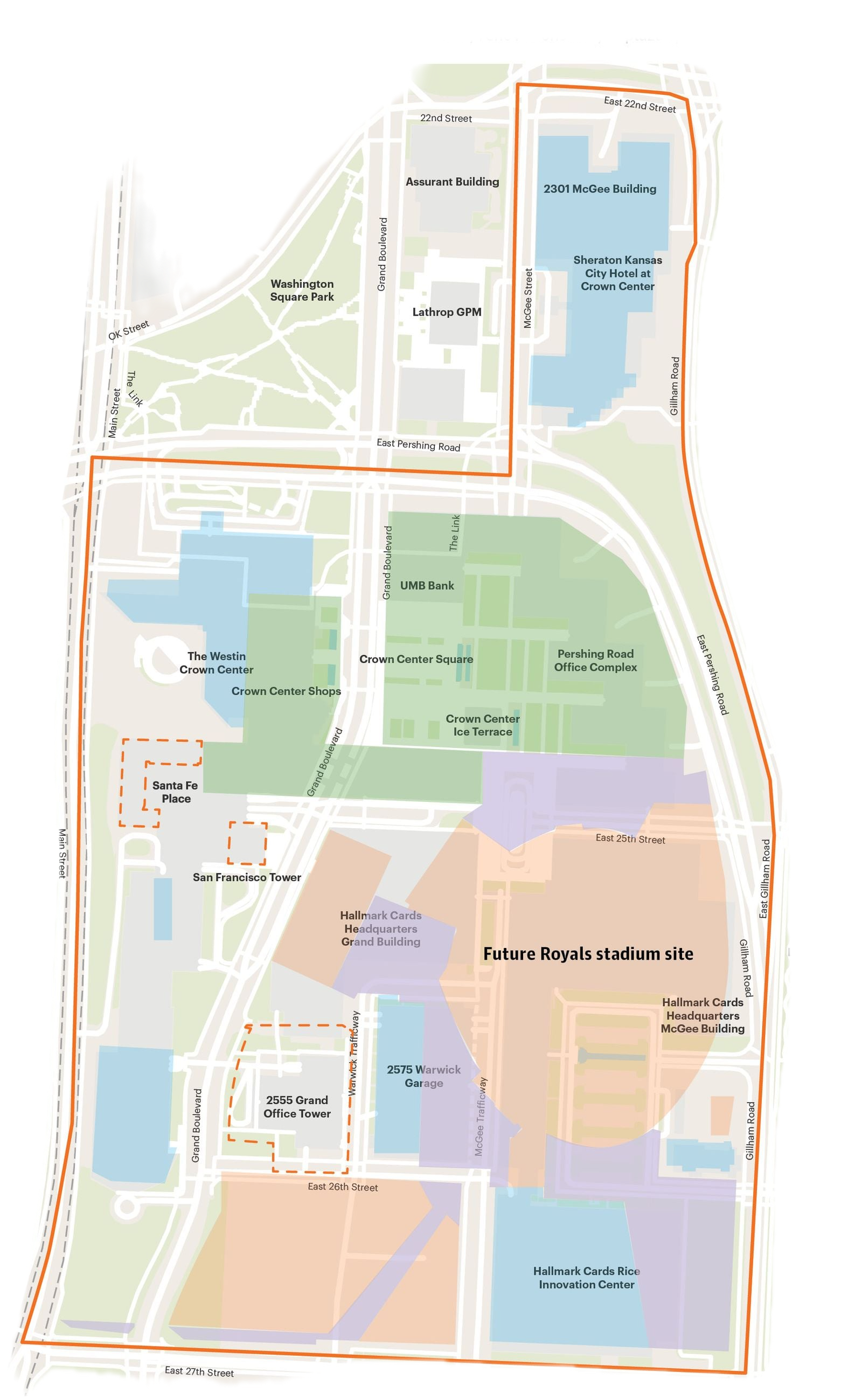
The Kansas City Royals’ proposed Crown Center ballpark district is quickly becoming one of the most important real estate stories in Kansas City. The latest filing connected to the Royals’ Crown Center plan brings more of the development picture into focus, including the potential for a new downtown ballpark, surrounding mixed-use development, and long-term investment activity in one of Kansas City’s most visible urban districts.
For Kansas City real estate, this story is bigger than baseball. A ballpark district at Crown Center could influence how people move through the urban core, where visitors spend time before and after events, which nearby parcels become more attractive for redevelopment, and how residential demand evolves around downtown Kansas City, Union Station, Crossroads, Hospital Hill, Beacon Hill, Union Hill, Martini Corner, Longfellow, and the Westside.
.png)
What the Royals’ Crown Center Filing Adds to the Real Estate Conversation
According to recent reporting, the Royals’ proposed Crown Center redevelopment centers on a new ballpark near the current Hallmark Cards headquarters area, with a broader district vision that could include residential, hospitality, entertainment, office, retail, parking, and public spaces. The project has been discussed as a major mixed-use redevelopment opportunity in the heart of Kansas City.
Real estate value is rarely driven by a single building. It is shaped by the full ecosystem around it: access, visibility, foot traffic, employment, housing, parking, transit, entertainment, infrastructure, and the likelihood that additional private investment follows.
Crown Center already has advantages that other stadium sites may not have. It is located near Union Station, the National WWI Museum and Memorial, Hospital Hill, the Crossroads Arts District, downtown Kansas City, hotels, offices, apartments, restaurants, attractions, and major roads. It also sits near the KC Streetcar corridor, which continues to play a larger role in connecting Kansas City’s urban neighborhoods.
For buyers, sellers, developers, and investors, that makes the Royals Crown Center ballpark district a real estate topic worth watching closely. It is not simply a stadium surrounded by vacant land. It is a potential redevelopment layer being added to an already active part of Kansas City.
Why Crown Center Is Different From a Traditional Stadium Site
Many stadium developments attempt to create a destination from scratch. Crown Center is already a destination.
The area includes hotels, office space, retail, family-friendly attractions, structured parking, public gathering spaces, and immediate proximity to Union Station. Surrounding neighborhoods already include a mix of residential, commercial, institutional, medical, and entertainment uses. If the Royals’ district moves forward, the real estate opportunity may be less about creating new demand and more about redirecting, intensifying, and extending demand that already exists.
That distinction matters for anyone studying Kansas City homes for sale, Kansas City multifamily properties, Kansas City commercial real estate, or Kansas City investment property opportunities.
Kansas City Market Context: Why Timing Matters
The Royals’ Crown Center filing comes at a time when Kansas City real estate is already evolving. Downtown Kansas City has seen years of public and private investment, residential growth, infrastructure improvements, and stronger interest from local and out-of-market investors.
According to the U.S. Census Bureau QuickFacts for Kansas City, Missouri, Kansas City continues to be one of the region’s largest population and employment centers. The broader Kansas City metro also benefits from a diverse economy, including health care, logistics, technology, professional services, sports, tourism, education, and real estate development.
Local housing market data from the Kansas City Regional Association of REALTORS® and Heartland MLS can help buyers and investors compare inventory, pricing, days on market, and sales trends across the metro. For downtown and urban-core development context, the Downtown Council of Kansas City is another useful resource for tracking major projects, employment trends, and investment activity.
The larger point is simple: the Royals’ proposed Crown Center ballpark district is not happening in isolation. It sits inside a broader Kansas City real estate story that includes streetcar expansion, downtown reinvestment, new apartment development, changing buyer preferences, and continued interest in urban neighborhoods.
What This Could Mean for Kansas City Homebuyers
For homebuyers, the most important question is not whether a new stadium will automatically increase property values. The better question is whether the surrounding district improves the daily living experience.
Buyers considering downtown Kansas City, Crown Center, Crossroads, Hospital Hill, Longfellow, Beacon Hill, Union Hill, Martini Corner, or the Westside should look closely at walkability, parking, public transportation, traffic patterns, noise, nearby construction, and long-term neighborhood demand.
A ballpark district can bring new visibility to nearby neighborhoods. However, visibility does not replace smart due diligence. Buyers still need to evaluate property condition, comparable sales, HOA restrictions, future assessments, insurance costs, resale potential, and how the home fits their lifestyle.
For buyers beginning their search, Wardell & Holmes Real Estate provides local search tools for Kansas City homes for sale and neighborhood research through Explore Kansas City.
What This Could Mean for Kansas City Sellers
For sellers near Crown Center, Crossroads, Hospital Hill, Union Hill, Beacon Hill, Martini Corner, Longfellow, downtown Kansas City, and the Westside, the Royals’ proposed district may add a new layer to the marketing conversation.
That does not mean every listing should be priced as if the stadium is already built. A stronger strategy is to position the property around durable location advantages, such as access to downtown employment, walkability, transit proximity, restaurants, cultural destinations, redevelopment momentum, and flexible future demand.
Sellers should avoid overpromising future outcomes. A strong listing strategy should use the Royals’ Crown Center ballpark district as context, not as the entire value proposition.
Wardell & Holmes Real Estate’s seller resources emphasize pricing strategy, preparation, buyer behavior, presentation, negotiation, and market conditions. For properties near future development zones, those fundamentals become even more important.
What This Could Mean for Kansas City Real Estate Investors
For investors, the Crown Center ballpark district creates several categories worth watching. The opportunity is not simply to buy anything near the proposed stadium. The better investment strategy is to understand which property types are positioned to benefit from long-term demand, infrastructure, and neighborhood momentum.
1. Small Multifamily Near Downtown Kansas City
Duplexes, triplexes, fourplexes, and small apartment buildings near downtown may benefit from broader urban-core demand, especially if they are near employment, transit, hospitals, restaurants, and entertainment districts. Investors should underwrite based on current rents, realistic expenses, repair costs, taxes, insurance, and conservative vacancy assumptions.
2. Mixed-Use and Commercial Properties
Commercial and mixed-use properties near walkable corridors may see increased interest if the district draws more consistent visitor traffic. Restaurants, retail, creative office, event space, service businesses, and hospitality-related uses may all become part of the broader development conversation.
3. Land and Infill Development
Vacant lots, underused parking areas, aging structures, and parcels with flexible zoning may become more important as developers study how Crown Center connects to Crossroads, Hospital Hill, Union Hill, Beacon Hill, and the Westside.
4. Short-Term Rental Potential
Some investors may immediately think about short-term rentals. That category requires careful research. Local rules, building restrictions, HOA policies, financing, insurance, permitting, and neighborhood sentiment can materially affect whether a short-term rental strategy is viable.
5. Long-Term Buy-and-Hold Opportunities
The most durable opportunity may be long-term ownership in neighborhoods that benefit from multiple demand drivers. A stadium can be one factor, but strong investment decisions are usually based on a combination of employment, transit, affordability, rental demand, property condition, and resale liquidity.
Investors can begin with Wardell & Holmes Real Estate’s Kansas City investment property resources, including guidance on rental portfolios, flips, off-market opportunities, rent comps, renovation costs, and investor strategy.
Neighborhoods to Watch Around the Royals Crown Center Ballpark District
Crown Center and Union Station
This is the immediate zone. Properties here may benefit from maximum visibility, tourism, events, public transportation, hotels, and cultural destinations. The challenges will include pricing, competition, parking, traffic, and uncertainty around the final district design.
Crossroads and Freight House
The Crossroads already has a strong identity built around restaurants, galleries, apartments, offices, entertainment, and creative businesses. A Crown Center ballpark could strengthen the connection between Crossroads, Union Station, and the southern edge of downtown.
Hospital Hill and Longfellow
Hospital Hill is anchored by medical and institutional demand. Longfellow offers historic housing, proximity to downtown, and access to major employment centers. These neighborhoods may appeal to buyers who want urban access with more of a neighborhood feel.
Union Hill and Martini Corner
Union Hill and Martini Corner sit in the path of urban-core growth and streetcar-adjacent demand. These areas may become even more relevant as buyers prioritize access to downtown, Crown Center, Midtown, and the Country Club Plaza corridor.
Beacon Hill and East Crossroads
Beacon Hill and East Crossroads continue to see infill, renovation, and redevelopment interest. Investors should watch zoning, land values, rental demand, and the balance between affordability and new construction.
Westside Kansas City
The Westside remains one of Kansas City’s most distinctive neighborhoods, known for its cultural identity, restaurants, views, historic homes, and proximity to downtown. Stadium-related demand may increase attention, but preservation, affordability, and neighborhood character will remain important parts of the conversation.
The Bigger Lesson: Follow Connectivity, Not Hype
The most important real estate signal may not be the stadium itself. It may be the connectivity around it.
Kansas City’s urban core is becoming more connected through streetcar expansion, downtown development, cultural investment, restaurant growth, tourism, and new residential demand. The Royals Crown Center ballpark district could accelerate that pattern, but it will not erase the need for careful property-level analysis.
For buyers, that means choosing homes that work for daily life. For sellers, it means marketing location with substance. For investors, it means underwriting deals based on real numbers, not headlines. For developers, it means studying where demand, zoning, infrastructure, and neighborhood identity intersect.
How to Evaluate Real Estate Near the Royals Crown Center Ballpark District
- Study the exact location. Compare walkability, parking, road access, transit proximity, and distance to Crown Center, Union Station, Crossroads, and nearby neighborhoods.
- Review zoning and use potential. Confirm whether the property supports residential, multifamily, commercial, mixed-use, redevelopment, or rental strategies.
- Use current market data. Review recent comparable sales, active inventory, days on market, rent comps, renovation costs, taxes, and insurance assumptions.
- Separate hype from fundamentals. Evaluate the property based on current performance and long-term demand, not only future stadium-related expectations.
- Work with Kansas City real estate professionals. Block-by-block knowledge matters in urban neighborhoods where value can change quickly from one street to the next.
Bottom Line
The Royals Crown Center ballpark district has the potential to reshape a major part of downtown Kansas City. The latest filing gives buyers, sellers, investors, and developers more to study, but many details remain in progress.
The opportunity is not simply “buy near the stadium.” The more strategic approach is to evaluate which properties benefit from improved connectivity, increased visibility, stronger residential demand, flexible zoning, and long-term urban-core investment.
For readers evaluating Kansas City real estate, downtown Kansas City homes, Crown Center-adjacent properties, multifamily investments, or commercial real estate opportunities, Wardell & Holmes Real Estate provides local search tools and neighborhood-focused resources through Kansas City homes for sale, Kansas City multifamily homes, commercial property search, and investment resources.
The best next step is not to chase the headline. It is to study the blocks, the numbers, the zoning, the access, and the long-term demand.
Frequently Asked Questions
What is the Royals Crown Center ballpark district?
The Royals Crown Center ballpark district is a proposed downtown Kansas City redevelopment centered around a new Royals ballpark near Crown Center, with surrounding mixed-use development expected to include residential, hospitality, entertainment, office, retail, parking, and public-space elements.
Will the Royals stadium increase Kansas City property values?
It may increase interest in nearby areas, but property values will depend on exact location, condition, zoning, parking, walkability, neighborhood demand, and broader market conditions. Buyers and investors should avoid assuming automatic appreciation.
What neighborhoods could be affected by the Crown Center ballpark district?
Crown Center, Union Station, Crossroads, Hospital Hill, Longfellow, Union Hill, Martini Corner, Beacon Hill, East Crossroads, and the Westside are all worth watching because of their proximity and connection to Kansas City’s urban core.
Is downtown Kansas City a good place to invest in real estate?
Downtown Kansas City can be attractive for investors who understand local rents, property condition, zoning, financing, taxes, and neighborhood-level demand. The strongest opportunities are usually based on multiple demand drivers, not one project alone.
Where can buyers search for Kansas City homes near downtown?
Buyers can begin by reviewing Kansas City homes for sale and using local neighborhood research tools such as Explore Kansas City.
Where can investors find Kansas City multifamily properties?
Investors can review Kansas City multifamily homes for sale and compare opportunities with current rent, expense, repair, and financing assumptions.
:format(webp):quality(80)/u.realgeeks.media/vestwellre/explore-kc-sidebar.png)
:format(webp):quality(80)/u.realgeeks.media/vestwellre/logo.png)
:format(webp):quality(80)/u.realgeeks.media/vestwellre/best_kansas_city_real_estate_agents.png)
:format(webp):quality(80)/u.realgeeks.media/vestwellre/header.png "Team Logo")